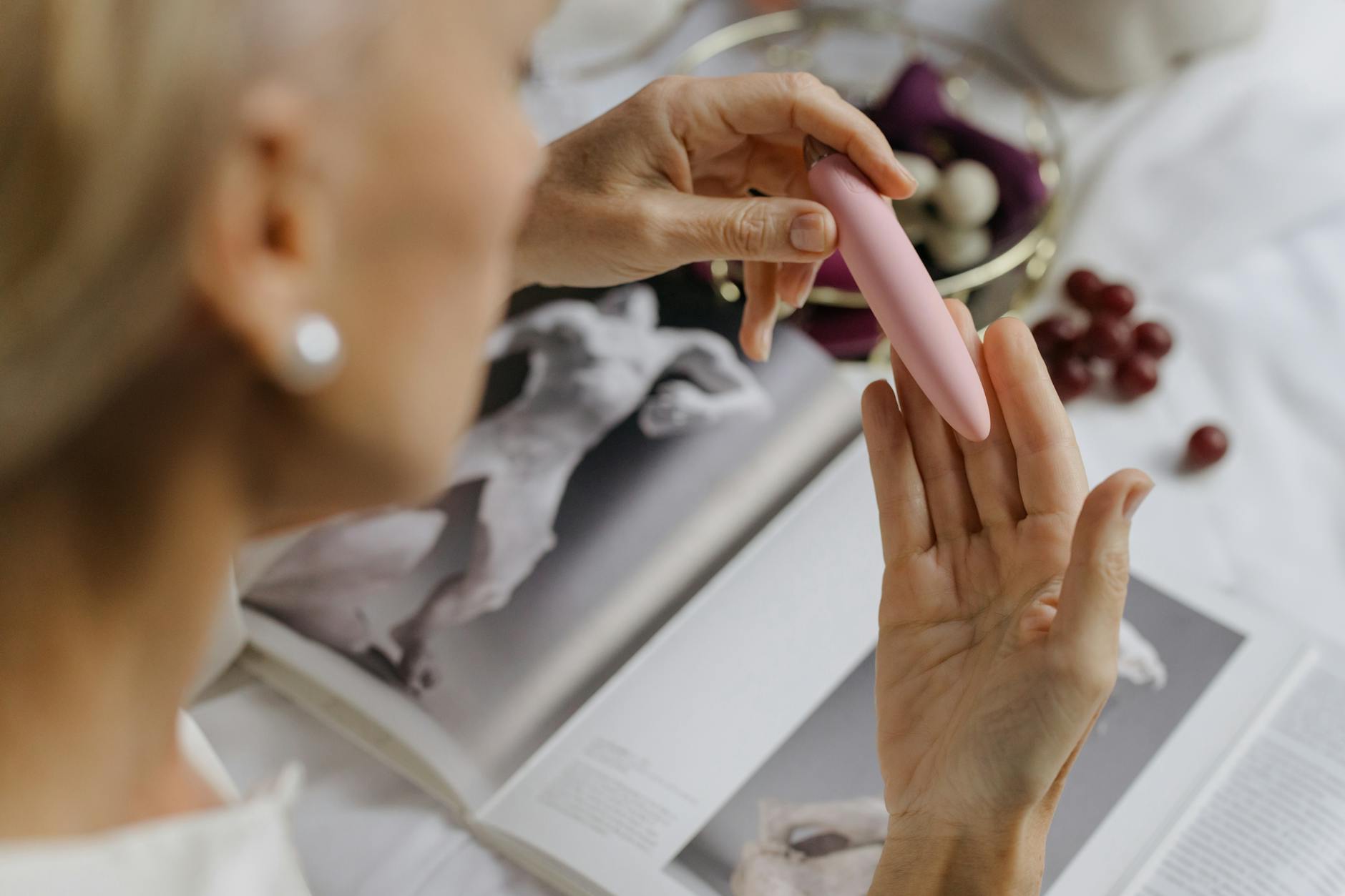
Here's the thing about intensity fade
You use your lemon vibrator three times a week. It felt amazing for the first month. Now, week eight in, you're cranking the pattern up higher and staying longer, and somehow it still doesn't feel quite like it did at the start. The question isn't weird, and the answer isn't "your body is broken." Intensity fade is real. So is the fix.
What actually happens neurologically
Your nervous system doesn't work like a light switch. It's more like a thermostat. When you apply the same stimulus repeatedly, your sensory nerves adjust their baseline. They stop firing as aggressively at the same intensity level because the signal has become normal, expected, routine. This isn't about your clitoris getting damaged or your toy wearing out. It's about neural adaptation.
This is called habituation, and it happens with every repeated stimulus. If you wear a wool sweater every day, you eventually stop feeling it on your skin. Your alarm clock's same tone stops waking you up the way it did month one. Your partner's cologne fades into the background after a while. Your body is doing its job perfectly. It's just doing it too well.
The critical part: habituation is not the same as desensitization from injury or overuse. Habituation is reversible. You can reset it.
Why lemon adult toys show this pattern more noticeably
The design of lemon vibrators, with their suction-based stimulation pattern, creates a very specific and consistent nerve activation. Because the sensation is so precisely targeted and repeatable across sessions, your nervous system habituates faster than it would with, say, a wand vibrator that you move around. The same precision that makes lemon sexual toys so effective for orgasm also makes them easier to habituate to.
This doesn't mean there's a flaw in the toy. It means you're likely using it frequently enough that your body has normalized the sensation. That's actually a sign you like it.
The four reasons intensity feels diminished
1. Actual neurological habituation. Your sensory nerves have adapted to the stimulus. The pathway is still there, but it's quieter.
2. Expectation mismatch. That first orgasm with a new toy is often backed by novelty, curiosity, and anticipation. Those emotional components amplify sensation. Once the novelty wears off, the physical sensation remains the same, but it feels softer by comparison.
3. Physical desensitization from micro-trauma. If you're using your lemon vibrator for 20-30 minute sessions multiple times weekly without breaks, the tissue can become temporarily less responsive. This is different from habituation and resolves with a rest period.
4. Changed baseline arousal. If your general stress level has risen, sleep has gotten worse, or your relationship dynamic has shifted, your baseline arousal drops. That makes everything, including a lemon clitoral vibrator, feel less intense by default.
How to reset without quitting
You don't need to take a month-long break (though that absolutely works). Four strategies that work faster.
Rotate patterns deliberately. If you've been using patterns 4 and 5 consistently, drop back to 1 and 2 for a week. Let your nervous system re-calibrate to lower intensity. Then when you return to your favorites, they'll feel sharper. This is micro-variation, not macro-variation.
Space sessions intentionally. Instead of three times a week, do twice a week for two weeks, then once a week for two weeks, then back up as sensation returns. Your nervous system needs the gap to downregulate the adaptation. The gap doesn't need to be long, just consistent.
Change the context. Use your toy at a different time of day. In a different room. With different music or silence. The brain encodes sensation in relation to context. Changing context can feel like novelty even though the toy hasn't changed. This is partly psychological and partly neurological, and it works.
Add a new sensation layer. Use lube you haven't tried before. Try temperature play (warm or cool hands around the toy, not the toy itself). Introduce a partner's touch elsewhere on your body during use. The compound stimulus resets your brain's baseline. Your lemon vibrator isn't less intense. Your brain just needed a reminder.
The middle path between rest and constant use
If you're using a lemon clitoral vibrator five times a week and intensity is flattering, dropping to twice weekly and rotating patterns will likely restore sensation within 3-4 weeks. You're not losing your toy or your pleasure. You're giving your nervous system space to re-sensitize.
If you're using it once or twice weekly and still feeling fade, look at stress, sleep, and relationship connection first. A toy can only deliver what your nervous system is ready to receive.
When fade signals something real
If you experience pain, numbness that doesn't resolve after a week of rest, or complete loss of sensation despite rotating patterns and rest, that's worth checking with a doctor. Persistent nerve damage is rare with responsible toy use, but it's not impossible if you've been using high-intensity patterns for very long sessions repeatedly.
Most intensity fade is just your brain and body doing exactly what they're designed to do. The fix is equally simple: variation, space, and patience.
FAQ
Can I permanently damage sensation by using a lemon vibrator too much?
Nerve damage from toy use is extremely rare with lemon vibrators. The stimulation is targeted but gentle compared to other toys. True nerve damage shows as persistent numbness that doesn't improve after two weeks of rest. Simple habituation resolves in 2-4 weeks with pattern rotation and spacing. If numbness lingers beyond two weeks, mention it to a healthcare provider, but this outcome is uncommon.
Does using a different pattern help reset intensity?
Yes. Switching to lower patterns for 1-2 weeks allows your nervous system to downregulate. When you return to your preferred pattern, it will feel sharper. The same pattern used repeatedly becomes boring to your brain. Alternation signals novelty without needing a full break.
How long should I rest if intensity has really faded?
Two weeks minimum, four weeks ideal. During this time, your sensory nerves downregulate the adapted baseline. When you resume use, even the same lemon sexual toy will feel notably different. If you resume too early, you'll slide back into habituation faster. Patience in rest pays off.
Is intensity fade the same as numbness from over-stimulation?
No. Habituation is gradual and neurological. Numbness from over-stimulation is acute, localized, and often accompanied by irritation or swelling. Habituation resolves with variation and spacing. Over-stimulation needs complete rest and possibly medical attention if pain or persistent numbness develops.
Will my lemon vibrator ever feel as good as it did the first week?
Yes, if you introduce variation. The first-week intensity includes a novelty boost that's hard to recreate exactly. But by rotating patterns, spacing sessions, and changing context, you can restore the sensation to nearly the same level. The psychological component of novelty is optional. The physical pleasure is always available if you give your nervous system the right conditions.
Does battery life affect how intense a lemon vibrator feels?
Marginally. A dying battery will reduce vibration amplitude, which you'll feel as a softer sensation. But if you're replacing batteries or recharging regularly, battery level isn't the culprit. Check that your lemon clitoral vibrator is fully charged before attributing fade to power issues.