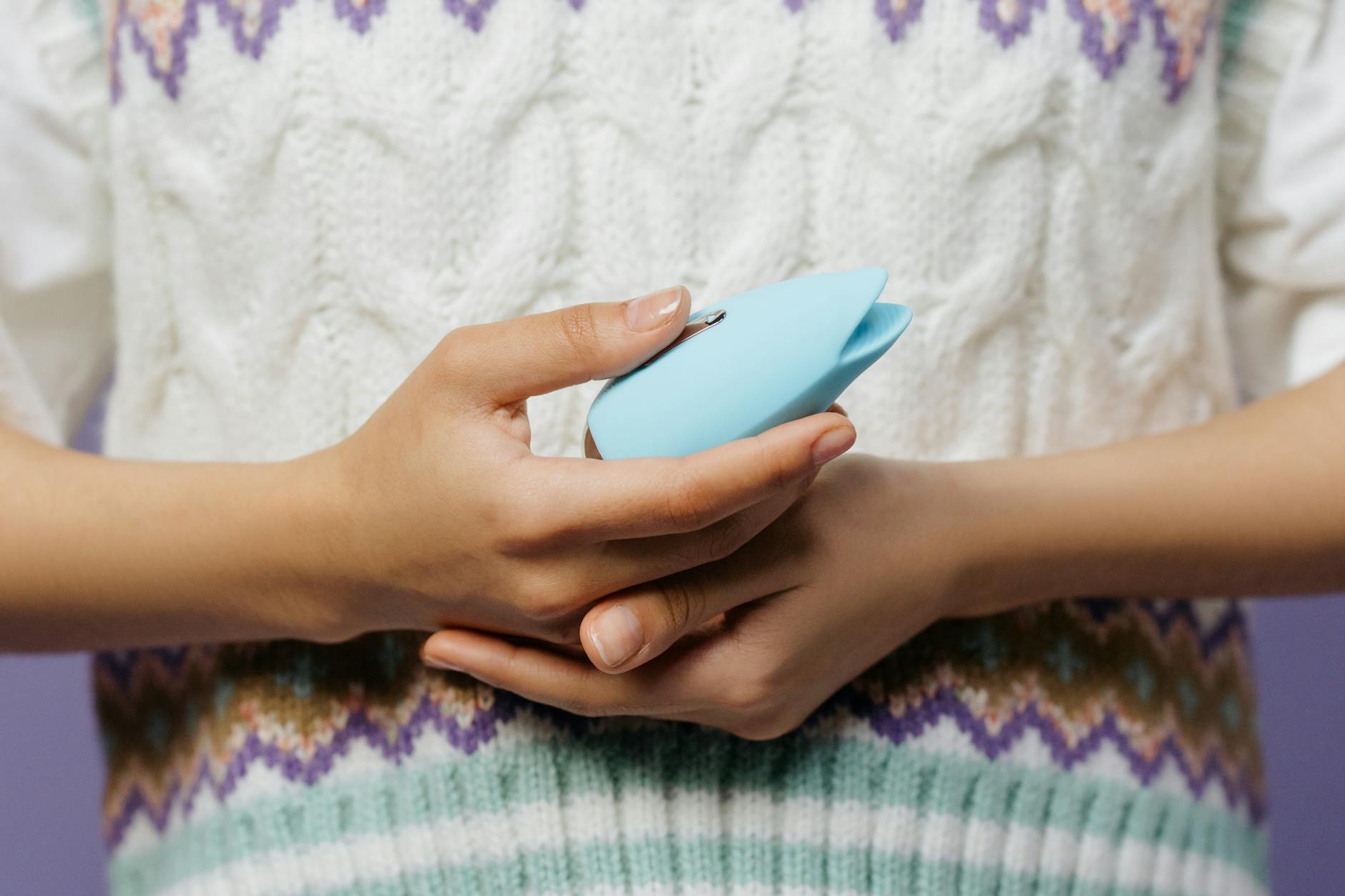
How to Find the Right Lemon Vibrator Intensity Level for Sensitive Skin
Let's be honest about sensitivity
Sensitivity is not a flaw. It's information. Your body is telling you something important, and ignoring it leads to soreness, irritation, or the kind of overstimulation that makes you want to avoid pleasure altogether. I've worked with hundreds of people who wrote off vibrators entirely because they assumed their skin was "too sensitive" for them. What they actually needed was permission to start slower.
Here's what I've learned: the intensity that works for your friend, your partner, or what you read online is irrelevant. The only number that matters is the one your body responds to with pleasure, not pain.
Understanding sensitivity at the tissue level
Your clitoral tissue has roughly 8,000 nerve endings packed into a space smaller than a pea. This is why it's exquisitely sensitive. It's also why vibration intensity feels wildly different depending on a few specific factors.
First, skin thickness varies person to person. Some people have thinner, more delicate tissue that needs gentler input. Second, inflammation matters. If you're dealing with vulvovaginal dermatitis, eczema, or even a minor irritation from friction, high intensity will aggravate it. Third, hormonal shifts change how your tissue responds. Right before your period, during ovulation, or after hormonal changes like those in How to Use Lemon Vibrators When Sensation Feels Muted After Hormonal Changes, sensitivity can spike or dip unpredictably.
Finally, anxiety tightens everything. If you're nervous about pain or irritation, your pelvic floor contracts, which makes sensation feel sharper and more uncomfortable.
The three-setting framework that actually works
Most lemon vibrators offer multiple intensity levels. If you have a Lemon Clitoral Vibrator or another multi-speed lemon toy, you're working with at least three settings. Here's how to use them strategically.
Setting 1: The exploration level. This is your slowest, gentlest option. Use this for your first 5-10 sessions, even if it feels "too soft." Your job here is not to have an orgasm. Your job is to build tolerance and understand how your body responds without any risk of irritation. Most people find that after 3-4 sessions at this level, they naturally want more intensity. That's your signal to progress. Don't skip this step.
Setting 2: The sweet spot. Once you're comfortable, move to mid-level intensity. This is where most people land when using a lemon vibrator regularly. It offers enough power to build arousal without the risk of desensitization or raw skin. This is also the setting I recommend for longer sessions (20-30 minutes), because sustained high intensity can cause temporary numbness or irritation.
Setting 3: The peak. High intensity is a tool for specific moments, not your baseline. Use it in the final 2-5 minutes as you're approaching orgasm, or during very short sessions (under 10 minutes). Think of it as a sprint, not a marathon.
Why you might feel irritation even at low intensity
If you're experiencing redness, soreness, or a raw feeling even at the gentlest setting, something else is at play.
Direct contact matters. Some people need a thin barrier between the toy and their skin. A soft cotton cloth, a piece of silk, or even a layer of clothing can reduce intensity without sacrificing sensation. It sounds counterintuitive, but try it. You might find that medium intensity through fabric feels identical to low intensity direct contact, with zero irritation.
Lubrication is non-negotiable. Even at low intensity, friction without lubrication will irritate sensitive skin. Use a water-based lubricant generously. Apply it to both the toy and your skin. Reapply if things start to feel dry. This single change solves irritation for about 40% of people I work with.
Timing and frequency also matter. If you're using a lemon vibrator daily, even at low intensity, your skin needs recovery time. Try spacing sessions 24-48 hours apart initially. Once your skin adapts, you can increase frequency without problems.
The role of arousal in how intensity feels
Here's something counterintuitive: the same intensity setting feels completely different depending on how aroused you are. When you're well-lubricated, relaxed, and genuinely in the mood, even high intensity feels good. When you're tense, distracted, or rushing, low intensity feels aggressive.
This is why the exploration phase matters so much. You're not just building physical tolerance. You're learning the difference between "this is too much" and "I'm not actually ready yet." These feel identical but require totally different solutions.
If you find yourself clenching, holding your breath, or bracing during a session, pause. That's your nervous system saying no. Lower the intensity, step back, breathe deeply, and ask yourself what you need right now. Sometimes it's lubrication. Sometimes it's more warm-up time. Sometimes it's to stop and come back later. All of those are completely valid.
When to suspect a skin condition, not just sensitivity
Some people have underlying vulvar skin conditions that make any vibration uncomfortable. Signs include persistent redness, burning that doesn't improve with lower intensity or lubrication, visible irritation that takes hours to fade, or pain that radiates beyond the direct contact area.
If this is you, a gynecologist is your first stop, not a lower intensity setting. Conditions like lichen sclerosus, vulvodynia, or dermatitis need professional diagnosis. Once treated or managed, vibrator use often becomes comfortable again. And if it doesn't, there are other tools that might work better for your body.
Building a sustainable routine at the right intensity
Once you've found your level, protect it. That means resisting the urge to constantly chase higher intensity. A lot of people worry they'll get "desensitized" and keep pushing the dial. The paradox is that staying at a comfortable intensity actually prevents desensitization, because you're not training your body to need more and more stimulus.
Think about it like exercise. If you lift the same weight indefinitely, your muscles adapt and you need more to feel the work. But if you vary the intensity, frequency, and duration, you stay engaged. Same with pleasure. Rotate between your settings. Mix solo sessions with partnered play. Swap lemon vibrators occasionally if you have access to different toys. Use different patterns if your toy offers them. Variation keeps sensation fresh without requiring higher and higher intensity.
Also, remember that your sensitivity baseline will shift. After hormonal changes, after a break, or simply as seasons change, you might need to recalibrate. That's not a regression. It's just information. When something doesn't feel right, return to the exploration phase for a few sessions. It typically resets your tolerance quickly.
The confidence piece no one talks about
Honestly, the biggest barrier I see isn't physical sensitivity. It's the shame around needing a lower intensity. People feel like they should be able to handle "normal" settings, so they push through discomfort instead of advocating for their own pleasure.
Your pleasure matters as much as anyone else's. And your body's feedback is not weakness. It's data. A lemon clitoral vibrator set to low intensity that feels incredible is infinitely better than a high-intensity experience that leaves you sore or turned off for weeks.
Start slow. Build gradually. Listen to your body. The right intensity level isn't something you find once and forget. It's something you calibrate continuously, and that's actually the whole point of having pleasure in your life.
People also ask
Can I use my lemon vibrator on sensitive skin every day?
Generally, yes, but with caveats. If you're at low to medium intensity, daily use is fine for most people. If you're at high intensity, every other day is better. Pay attention to how your skin feels. If you notice any redness or soreness that doesn't fade within an hour, space sessions further apart. The goal is sustainable pleasure, not pushing through discomfort.
Why does my lemon vibrator feel more intense than my friend's?
Three main reasons. First, tissue thickness and sensitivity vary naturally. Second, you might be using it slightly differently. Angle, pressure, and movement all change how intensity feels. Third, your current arousal and stress levels affect everything. Even the same toy can feel wildly different day to day.
Is it normal to need lubrication with a lemon clitoral vibrator at low intensity?
Completely normal. Lubrication isn't just for comfort. It changes how vibration transmits through tissue and reduces friction that can cause irritation. Use it liberally, even at low settings. Water-based lubrication is ideal for silicone toys.
Should I avoid lemon vibrators if I have vulvodynia or chronic pain?
Not necessarily. Some people with vulvodynia find that gentle, consistent stimulation actually helps. Others find that any vibration triggers flares. The only way to know is to test it carefully at the absolute lowest intensity, with plenty of lubrication, for short sessions. If it makes things worse, stop. If it helps, you've found a tool that works for your body. Work with a pelvic health specialist if possible.
How long does it take to adjust to a new intensity level?
Most people adapt within 3-5 sessions. Start with a few minutes at the new level, build gradually, and give your body time between sessions. If a level still feels uncomfortable after five tries, it's not the right one. Move down instead of pushing through.
Can I combine lower intensity with different patterns or techniques?
Absolutely. If your toy has multiple vibration patterns, lower intensity combined with a pattern you love might feel better than higher intensity with a basic setting. You can also layer techniques like mixing external and internal stimulation, or using the toy with a partner. Creativity often solves what intensity alone can't.
The bottom line
Finding your right intensity is not a problem to solve. It's a skill to develop. Start at the bottom, listen carefully, and let your body guide you. The sweetest pleasure isn't always the strongest. Sometimes it's just the one that feels exactly right, and you've given yourself permission to take all the time you need to find it.