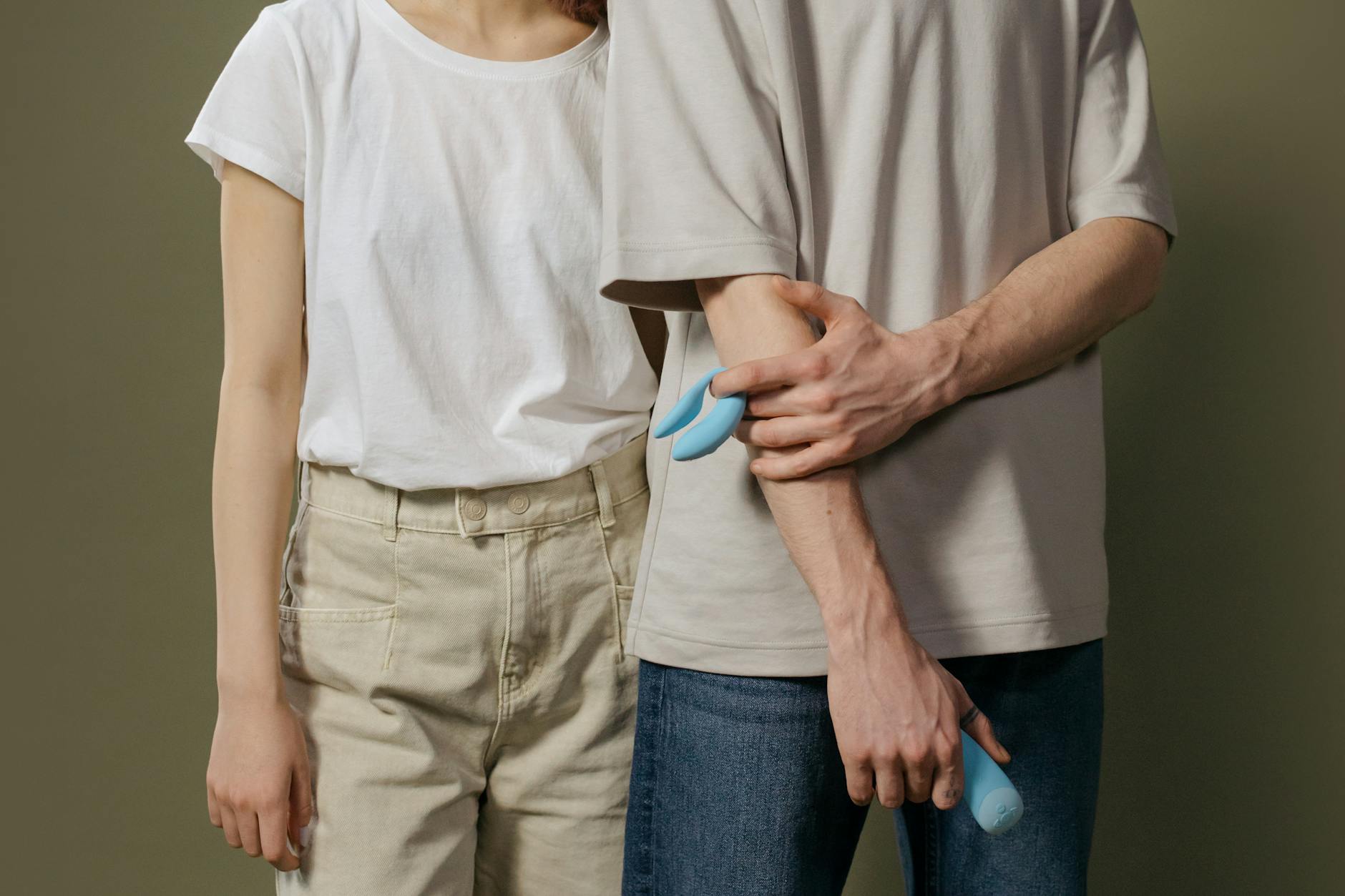
When a relationship evolves, so does everything else
You don't buy the same car at 25 and 45. You don't want the same apartment. And if you're honest, you don't want sex the same way either. The problem is that most couples never actually talk about how their pleasure needs shift. They assume static. Then something breaks.
Lemon vibrators, specifically lemon clitoral vibrators like the Lem, give couples a framework for that conversation. Not because toys are magic, but because they're concrete. They're something you can hold, discuss, adjust. They force specificity out of vague feelings.
Early dating: the introduction question
Most people introducing toys early in a relationship worry about one thing: "Will they think I'm not satisfied?" That's backwards. What they're actually afraid of is judgment. The fear is valid. The solution is transparency.
Here's what works. Don't lead with the toy. Lead with the experience you want. Say something like: "I really like exploring what feels good. I use toys solo, and I'd love to try them together if you're open to it." That frame removes defensiveness. You're not saying you need a toy to enjoy them. You're saying you want to share something you already know works for your body.
With a lemon vibrator specifically, the approach changes the dynamic slightly. A Lem or similar clitoral suction toy isn't inside. It's external. It's not replacing anybody. That matters psychologically for early-stage partners. They're less likely to feel like the toy is doing the job they're supposed to do.
Start at low settings. Make it playful. If your partner is new to toys entirely, let them hold it first without turning it on. Hands-on familiarity kills anxiety fast.
Committed relationships: the integration phase
Once you're past the introduction, most couples fall into a pattern. Then that pattern gets boring, or something changes. Libidos misalign. One person is busier. Stress arrives.
This is when lemon vibrators stop being novelty and become infrastructure. You're not using them as foreplay seasoning. You're using them as a reliable pathway to the kind of pleasure both partners actually want.
The integration phase requires a conversation most couples skip. It's not "Should we use toys?" It's "What are we both actually trying to get out of sex right now?" If one partner is exhausted and wants faster orgasms, a lemon sucker tool designed for quick, focused stimulation serves that need directly. If the other partner wants sustained intimacy, you build that around it instead of against it.
One thing I notice: couples who've been together 3-7 years often assume they know each other's preferences completely. They usually don't. A lemon clitoral vibrator becomes permission to ask again. "What setting do you actually want tonight?" "Does this feel better than it used to?" The toy reintroduces curiosity.
Long-term partnerships: the maintenance work
After a decade or more, most couples have settled into whatever they've settled into. That's not bad. But it often means desire gets filed under "life maintenance" instead of "something we prioritize." Lemon vibrators help here in an unsexy way: they make pleasure faster and more reliable.
Longer relationships often have different bodies than they started with. Hormones shift. Medications change response. Stress lives differently in the body. A lemon vibrator that worked flawlessly in year two might need a different approach in year twelve. That's completely normal.
I ask clients in long-term relationships: "What would need to be true for you to want sex more?" Often the answer isn't "more passion." It's "less friction." A lemon clitoral vibrator reduces friction. It gets you both to orgasm faster if speed is what you need. It concentrates sensation if distraction is the problem.
What matters most in this stage is staying curious. Don't assume you know what your partner wants. Ask every few months. Reintroduce options. Try new settings on the Lem if you have one.
The sex after a major life event
Children, job loss, relocation, health issues. These things blow up whatever system you had.
If you're coming back to intimacy after months of it being deprioritized, lemon vibrators help because they're permission-givers. You don't have to perform. You don't have to build slowly. You can access pleasure directly and quickly. That matters when you're exhausted.
After my clients have children, I usually suggest reframing toys entirely. They're not "spicy extras." They're "tools that let us reconnect without needing two hours and perfect conditions." A Lem or similar toy takes ten minutes. That's realistic. That's sustainable.
During health transitions, when one partner's body is changing, toys can actually deepen intimacy because they're not performance-based. There's no pressure to maintain something you can't maintain. The toy does one job. You both get to be present.
Communication patterns that actually hold
Every transition I've described above requires one thing: saying what you actually want instead of hinting at it.
Most couples develop a kind of emotional shorthand that works until it doesn't. Your partner stops decoding the hints correctly. Then resentment builds. Toys become the problem instead of the solution.
Here's what prevents that. Get specific about settings, sensations, timing. Not in a clinical way. Just clear. "I want the Lem on medium tonight." "Can we start with the toy and then move to us?" "I'm too stressed for anything long. Can we do this fast?" That clarity resets the dynamic every time.
One pattern I notice in relationships using lemon vibrators well: they treat the toy as a conversation starter, not a conversation ender. "This feels better than last time" is data. "You seem more into this setting" is observation. These micro-conversations keep couples in sync as they change.
When to add more variables
Some couples stay happy with one tool. Others want to experiment as they go deeper together.
If you're thinking about adding more exploration, do it together intentionally. Don't surprise your partner. Don't introduce three new things at once. One shift at a time. Let each change settle before you layer in the next.
The beauty of lemon sexual toys as your baseline is that they're accessible and reliable. That stability lets you experiment safely with other variables. Temperature play. Different positions. Different timing in your cycle or menstrual cycle. Whatever.
The relationships where toys weren't the real issue
Sometimes couples bring toys into the bed because the real problem is elsewhere. Toys don't fix contempt. They don't rebuild emotional intimacy. They don't heal betrayal.
If your relationship is struggling and you're hoping a lemon vibrator fixes it, that's asking too much of silicone. Get support first. Have the harder conversation. Then toys can be an add-on, not a band-aid.
Practical next steps
Start by naming which stage you're in. Early. Established. Long-term. Recovering. That naming clarifies what you actually need right now.
Then have one conversation with your partner. Not about toys specifically. About what you both want intimacy to feel like in this phase of your relationship. Then see if a lemon clitoral vibrator fits that picture. It might. Or you might realize you need something different entirely.
The goal isn't owning toys. It's being honest about what you both actually want and building that together.
FAQ
Can you use lemon vibrators in every stage of a relationship?
Yes, but the role changes. Early on they're novelty and consent-building. Mid-relationship they're tools for alignment. Long-term they're infrastructure for connection when time is tight. What matters is that both partners actively want them in that phase.
What if one partner is excited about toys and the other isn't?
That's not a toy problem. That's a desire mismatch. Talk about what's actually driving the resistance. Is it discomfort? Insecurity? Feeling pressured? Different libido entirely? The toy isn't the issue to solve. The disconnect is. Get curious about that first.
Do lemon vibrators change how often couples have sex?
Sometimes. If one partner wanted more sex but felt unsatisfied, a toy can help. But if the real issue is emotional distance or misaligned life stages, a vibrator won't close that gap. It might actually highlight it.
How often should you introduce new tools or techniques to a partner?
Slow. One thing every few months, max. Too many changes too fast feels chaotic. What matters is that each shift is something you both discussed and agreed on. Surprises backfire.
What if your relationship is new and you're not sure how a partner will react to toys?
Lead with honesty, not the toy itself. Tell them toys matter to you. See how they respond. If they're curious, introduce gradually. If they're skeptical, understand why. You can't force comfort. You can only offer transparency and give them space to come around.
Should you always use lemon vibrators together, or is solo use fine too?
Both are valid. Some couples use them together always. Others use them solo and separately. What matters is that neither partner feels like the other is choosing the toy over them. Clear boundaries help. "I use this solo on Tuesday nights" is different from secretly using it and hiding it. Honesty, even about solo pleasure, actually strengthens partnerships.