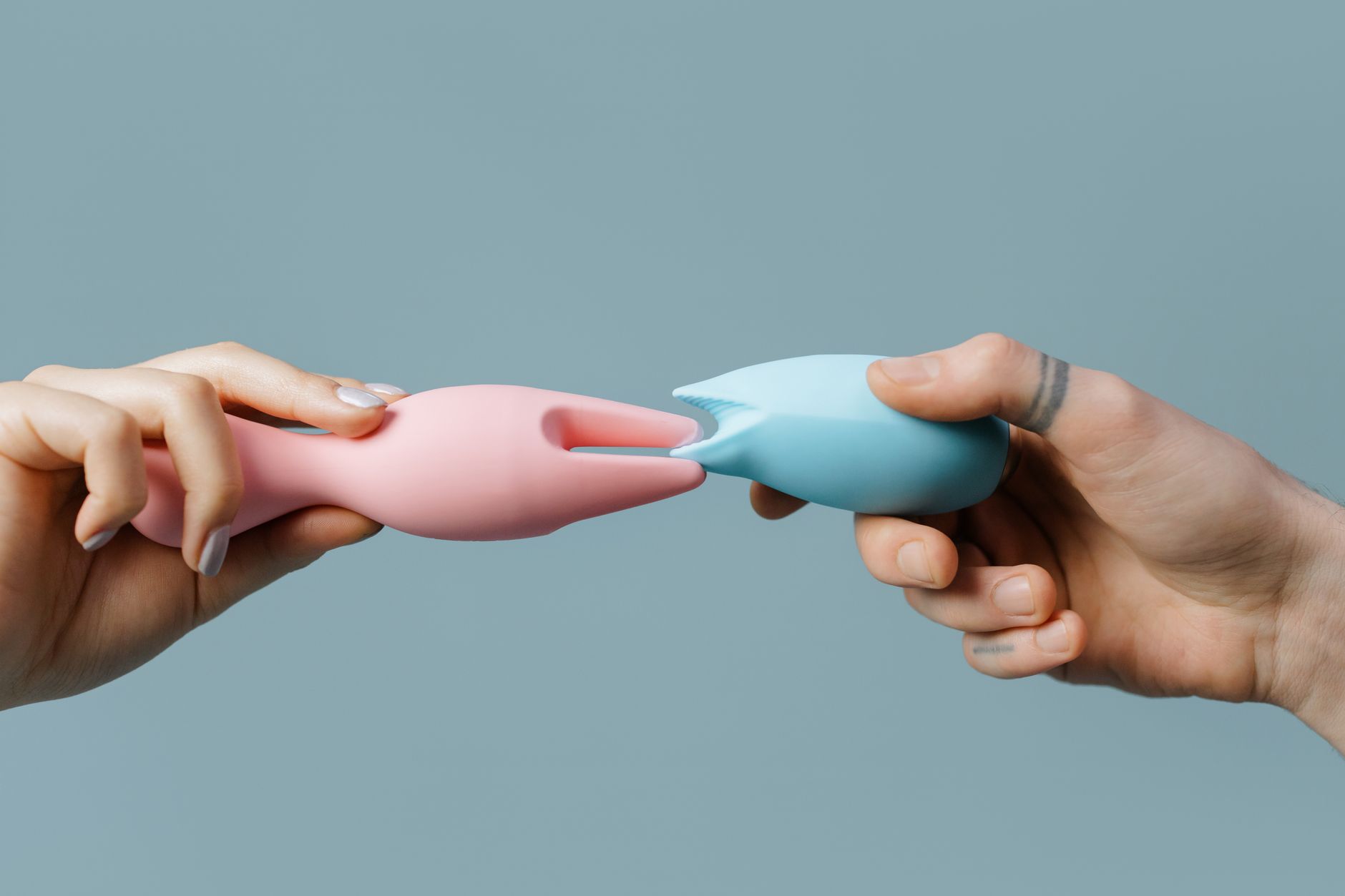
Your body changes. So does pleasure. That's not loss.
Pregnancy, surgery, medical transition, significant weight change, illness recovery. Any of these reshapes the physical landscape of pleasure. And honestly, most people don't talk about what comes next. There's a gap between "your body is healing" and "your body feels like home again." That gap is where a lot of shame lives, and it doesn't have to.
Here's what I know after years of working with couples navigating body transitions: reconnecting with pleasure after physical change is absolutely possible. It just requires curiosity instead of expectation. And sometimes, it requires adjusting how you're approaching tools like lemon vibrators.
Why your changed body might respond differently to vibration
When your body shifts, so does sensitivity, arousal architecture, and what feels good. These aren't failures. They're recalibrations.
If you're postpartum, your pelvic floor is learning to function again after months of stretching. Sensation might feel muted at first, or weirdly heightened in unexpected places. Hormones are in flux. Your brain is managing a thousand new things. Your clitoral tissue didn't go anywhere, but the pathway to arousal has genuinely changed.
If you've had surgery (hysterectomy, oophorectomy, bottom surgery, breast surgery), the nervous system in that area is healing. Scar tissue changes how sensation travels. Organs that used to be there create phantom sensations or surprising absences. This is neurology, not psychology.
If you've experienced significant weight gain or loss, the angle and accessibility of your body is different. What used to require no adjustment now needs repositioning. That's information, not rejection.
The good news: lemon vibrators, with their precision suction design, often adapt beautifully to changed anatomy. You just need to know how to recalibrate.
Start lower than you think you need to
This is the most common mistake I see. People assume their body "should" respond the way it used to, so they start on the intensity level they used before the change.
Don't do that.
If you're postpartum, your pelvic floor is weakened and sensitive. Start on pattern 1 or 2. If you've had pelvic surgery, the tissue is literally new. Patterns 1 or 2. If you're transitioning medically, hormonal shifts change baseline sensitivity. Patterns 1 or 2. You can always go up. You cannot undo overstimulation in the moment.
With clitoral vibrators like the Lemon's air-suction design, less force goes a long way. The suction mechanism doesn't pound. It draws sensation inward. That means even low intensity creates a lot of feeling. Give your recalibrated nervous system time to register it.
Spend at least three to five sessions on pattern 1 before experimenting with anything higher. You'll learn what "pleasure" feels like in your new body. That baseline matters.
Positioning matters more than it used to
Your changed body has a different geometry. Angles that used to work might create pressure on healing tissue. Positions that felt impossible might now be comfortable.
Postpartum: the pubic bone sits differently. Pressure from below can feel strange. Try positioning yourself reclined or side-lying so gravity isn't pulling downward. The clitoral area has room to receive sensation without that added weight.
Post-surgery: scar tissue changes how tissue stretches. If you've had any abdominal or pelvic surgery, internal healing means external stretching feels different. Lying flat might create too much tension. Propped up on pillows might feel better. Trial and error here is not a waste of time. It's information gathering.
Post-weight-change: your body's landscape has shifted. Angle and access are different. If you've gained weight, your body might benefit from more propped positioning so you can reach comfortably and apply the lemon vibrator at the right angle without strain. If you've lost weight, positions that required flexibility might now feel weird. You're learning your new architecture.
The Lemon's compact design is helpful here because you have a lot of freedom in positioning. You're not managing a large wand or complex harness. Just you, your body, and room to adjust.
Lubrication becomes your friend in ways it might not have been before
This applies especially to postpartum bodies and post-surgical healing.
Your natural lubrication might be lower (hormones, healing, sometimes medication). Don't interpret that as a sign to push harder or go higher in intensity. Interpret it as "add lube."
Water-based lubricant creates a glide layer. It protects healing tissue. It helps the suction of a lemon vibrator feel more comfortable because there's less direct friction. It's not a workaround. It's a tool that makes sensation accessible.
Apply it generously. Reapply if you're going for longer sessions. If you're postpartum and everything still feels a bit swollen, cooler lube (stored in the fridge, not frozen) can feel soothing and help reduce sensitivity spikes.
Mental reconnection takes as long as physical reconnection
Here's the part no one prepares you for: your body has changed, and your relationship with pleasure might have changed too.
If you're postpartum, you might feel touched out. A partner touching you, or even touching yourself intentionally for pleasure, might feel like one more demand on a body that's already demanded everything. That's not lack of desire. That's depletion.
If you've had surgery, you might feel disconnected from the part of your body that was operated on. Grief lives there sometimes. Fear too. Reengaging with that body for pleasure is not just physical. It's also emotional processing.
If you've experienced weight change, you might be adjusting to how you see and feel in your own body. That adjustment is real and deserves time.
The practice of using a lemon vibrator isn't just about orgasm. It's about consent with yourself. It's about your body having agency. Start with solo sessions where there's no performance, no partner expectation. This is reconnaissance. You're learning your new landscape. That's the entire goal.
When to involve a partner in the process
If you have one, and you want to.
The key: separate the conversations. "I'm exploring pleasure in my changed body" is not the same as "I want us to be intimate." One is about you. The other is about the two of you. They can exist separately, and often they should.
Invite your partner into your solo exploration only when you're ready. Some people want a witness. Some want privacy during this recalibration. Neither is wrong. If you do want them present, be explicit about what that means. Are they watching? Touching? Available for feedback or just there? The clarity removes guesswork.
If your partner is adjusting to your body change too (new postpartum softness, surgical scars, anything), that's another conversation entirely. Couples therapy or a relationship coach can help unpack that without conflating it with your personal pleasure process.
Patience with non-linear progress
Some days, sensation will feel rich and accessible. Other days, the same intensity on the same body part will feel like nothing. This is normal. Healing is not linear. Hormones fluctuate. Stress levels change. Pelvic floor tension varies.
If a session feels muted, don't respond by cranking up intensity. Respond by stopping. Close the laptop. Go for a walk. Hydrate. Try again tomorrow. You're not broken. You're integrating a changed body. That integration has rhythm and resistance and rest built into it.
Over weeks and months, you'll notice patterns. Maybe sensation peaks mid-cycle if you still menstruate. Maybe healing progresses faster than you expected. Maybe some days your pelvic floor is so tense that pleasure requires serious warm-up time. These are insights. Write them down if you want. Return to them. You're building a new map.
The clitoral vibrator advantage for changed bodies
Why lemon clitoral vibrators work well during transition: precision without penetration. The external, suction-based design means you're not asking your changed internal anatomy to participate before it's ready. You're not managing a partner's expectations about depth or angle. You're accessible to yourself at your own pace.
The Lemon's multiple intensity patterns let you titrate sensation finely. That matters when your nervous system is recalibrating. You're not locked into "off" or "full throttle." You can find the exact frequency that your body today recognizes as pleasure.
That precision is not a luxury. For a body in transition, it's the difference between reconnection and frustration.
FAQ: Using lemon vibrators with changed anatomy
How long after surgery should I wait before using any vibrator?
That depends on your surgery and your surgeon's guidance. For most pelvic surgeries, external-only tools like a clitoral vibrator are safe sooner than anything penetrative. But talk to your doctor first. Infection risk, suture integrity, and tissue healing timelines vary. Once you have clearance, start with the lowest intensity and shortest sessions. Three to five minutes, pattern 1, once or twice a week.
Is postpartum pleasure the same for vaginal birth versus C-section?
No. C-section introduces abdominal healing and scar tissue above the pubic bone. Vaginal birth involves perineal and pelvic floor recovery but no abdominal incision. Both reshape sensation, just differently. Vaginal birth might mean pelvic floor sensitivity is the limiting factor. C-section might mean abdominal positioning is the priority. Your experience is specific to your birth.
Can I use a lemon vibrator if I still have feeling numbness after surgery?
Yes, but with intention. Numbness is nerve healing, and stimulation sometimes helps nerve endings reactivate. Start sessions as experiments. Note what you feel or don't feel. Some areas will wake up over months. Some might stay numb. Neither is failure. And if sensation doesn't return in an area, your pleasure is not located only there. You have other places that work.
What if my new body feels nothing on my clitoris?
That might be temporary (swelling, nerve inflammation, hormonal). It might also be lasting. Either way, expand your exploration. Your clitoris is one part of a larger system. Your labia, your perineum, your inner thighs, your lower abdomen. Sensation lives everywhere. Try the lemon vibrator on different areas. Experiment with vibration versus pressure versus rhythm. Sometimes the button that works is not where you expected.
How do I know if I'm ready to be intimate with a partner again after my body has changed?
You're ready when you've reconnected with your own pleasure first. Not all of it. Not permanent comfort. Just enough to know your body still recognizes what feels good. Once you have that information, partnered intimacy becomes choice, not territory reclamation. And that's the difference.
Can intensity sensitivity change permanently after birth or surgery?
Yes, sometimes. Your baseline might shift. That's not damage. That's your new normal. Some people find their threshold for intensity permanently lowers. Others find it raises. Some find that different areas of their body have wildly different thresholds. This is your new body's information. Use it. Lemon vibrators' multi-pattern design means you're not locked into one intensity. You can meet your body where it actually is.
You're not starting over. You're translating.
Your body has changed. The pleasure you knew is not lost. It's speaking a new language now. And learning that language, with patience and curiosity, is not a setback. It's an opening.
Start low. Adjust position. Add lube. Give yourself time. Notice what shifts. That's the entire practice.
If you have questions about your specific situation, your doctor or a pelvic physical therapist can help. And if you want to explore your reconnection with a partner, a relationship coach or sex educator can help you both navigate that transition with clarity instead of assumption.
Your pleasure matters. Your changed body deserves the same attention and care you'd give a new partner's body. You're worth that curiosity.