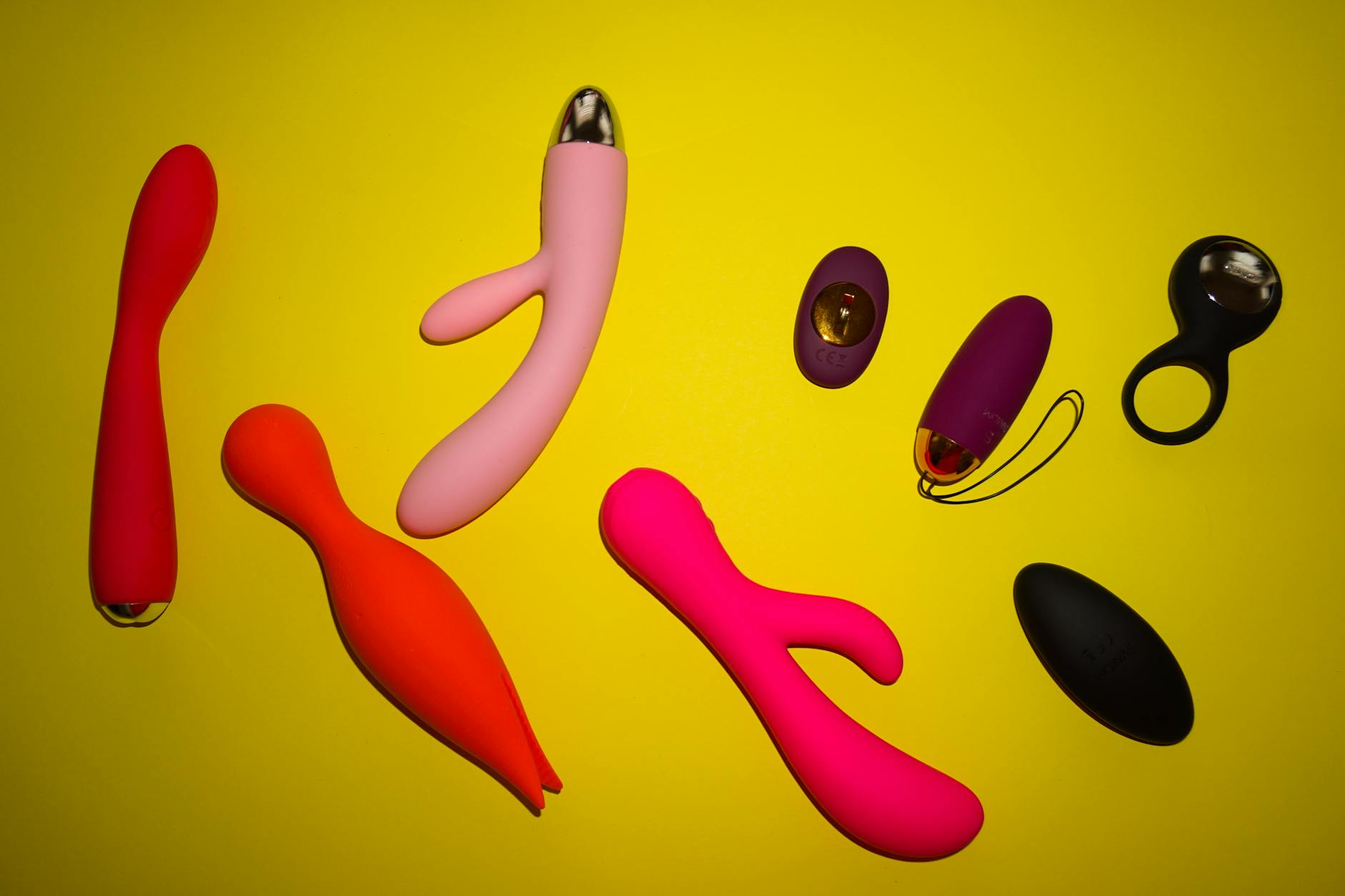
The thing no one tells you about slower arousal
Let's be real: arousal doesn't always arrive on schedule. Sometimes your body takes 20 minutes to warm up instead of five. Sometimes it takes 40. And somewhere along the way, you've probably internalized the message that this is a problem to fix, a sign that something's wrong with you or your relationship.
Here's the actual situation. Slower arousal is completely normal. It happens across age groups, relationship stages, stress levels, and hormonal profiles. And the moment you stop treating it as a malfunction and start treating it as information about what your body needs, everything changes.
Why arousal timelines shift
There are roughly five big categories here, and knowing which one you're in makes a real difference to how you approach it.
Stress and mental load. Your brain can't trigger arousal when it's running a simultaneous spreadsheet of your to-do list. Cortisol literally competes with the neurochemicals that build desire. This one's not negotiable.
Medications or supplements. SSRIs, blood pressure meds, and even some antihistamines can flatten arousal speed. So can low iron or B12. If this started suddenly and coincides with a script change, that's worth mentioning to your GP.
Life transitions. New relationship, new job, kids in the house, aging parents, grief, health changes. Your nervous system knows something shifted, and it's cautious. That's not weakness. That's wisdom.
Relationship dynamics. If there's unresolved tension, mismatched desire, or a breach of trust, your body won't let you relax into pleasure. This is your system protecting you. Listen to it.
Natural variation. Some bodies just take longer. Always have. Always will. This isn't a malfunction. It's your baseline, and once you accept it, you can work with it instead of against it.
The arithmetic of time and anticipation
Here's something worth knowing: the longer you take to warm up, the more powerful your eventual arousal often is. This is neurologically real. Your body's building toward something with more depth and texture.
But only if you have time. And that's the real friction point. Most cultural narratives around sex assume arousal arrives in five minutes, peaks in another five, and wraps up in ten. That structure doesn't work for slower bodies. You'll spend the whole encounter feeling rushed, and your partner will spend it watching you look tense.
The solution isn't to force your body to match a timeline that doesn't belong to you. The solution is to claim the time your body actually needs.
With a partner, this means saying it out loud. "I warm up slowly. That's not about you. That's about my body. I'm going to spend 25 minutes on foreplay before we even think about what comes next." That's not a negotiation. That's information.
Solo, this means blocking actual time. Not squeezing in a quick session between meetings. Not half-paying attention while your phone sits nearby. Actual, protected time. Forty minutes. An hour. Whatever it takes.
How lemon vibrators change the equation
Lemon vibrators are particularly useful for slower arousal because of how they work. The suction and pattern-based stimulation builds sensation gradually. You're not asking your body to go from zero to sixty. You're asking it to follow a curve.
Start on pattern one or two. That's the point. Not because you can't handle intensity, but because your arousal timeline is longer, and you want to ride the build, not skip ahead.
The Lem's suction sensation is subtly different from traditional vibration. It feels like pressure that's working with your body rather than at it. For people with slower arousal, that distinction matters. It's easier to stay present with sensation that feels responsive rather than aggressive.
Keep your hands free long enough to notice what's actually happening in your body. This sounds obvious, but it's not. Most of us are so convinced we need to do something that we skip the part where we actually feel it. Slow arousal needs that feedback loop. Your body's telling you it's ready to go deeper. Listen.
Practical structure for extended warm-up
If you're working with a lemon vibrator solo and you know you have a slower build, here's a framework that works.
Minutes 0-10: Anticipation and setup. No vibration yet. Foreplay, manual stimulation, whatever your body actually wants. The Lem can sit nearby. Your brain is starting to shift into a different mode.
Minutes 10-20: Introduction. Introduce the vibrator on the lowest pattern. Explore where the sensation feels strongest. You're mapping your own responsiveness, not racing toward orgasm.
Minutes 20-35: Depth. Your arousal is building. You might move up to pattern three or four. You might stick with pattern two because it's hitting exactly right. There is no correct answer. Follow your body.
Minutes 35+: Extension or finish. Some days you'll stay in that extended plateau for another 15 minutes. Some days you'll find your rhythm and move toward orgasm. Both are fine.
The whole point is that you're not cramming your natural timeline into someone else's box.
When you have a partner
Slow arousal in a partnered context requires conversation before it requires anything physical. Your partner needs to understand that this isn't about their attractiveness or their technique. It's about how your nervous system is wired.
If you want to use a lemon vibrator with a partner, the conversation might sound like: "I warm up slowly. I'd like us to spend more time on foreplay. I'm going to use the Lem during that time because it helps me get where I need to go. This isn't instead of you. It's in addition to what we're doing together."
Lemme be clear: this works best when there's already basic trust and communication in place. If your partner is resistant to the idea of a toy, that's a different conversation altogether.
For partners who are interested in helping, the dynamic often looks like: extended manual or oral foreplay from your partner while you use the Lem. You're building sensation from two sources at once, which actually speeds the overall arc without forcing your body to go faster than it wants to go.
The mental side of slower arousal
Honestly, the physical logistics are the easy part. The mental part is harder.
So much of slower arousal is actually slower permission. You need to give yourself permission to take the time. To not apologize for your body's timeline. To not treat extended foreplay as foreplay at all, but as the main event.
That requires you to shift the narrative you've been carrying. You're not broken. You're not lazy. You're not withholding. Your body has a rhythm, and it deserves to be honored.
This is especially true if you've spent years in relationships where your timeline didn't matter. Your body learned to shrink itself. It learned to skip ahead. Using a tool like a lemon vibrator, paired with actual time and actual attention, can help you relearn what your own arousal actually feels like when you're not rushing.
Troubleshooting the long build
If you're taking 45 minutes and you're frustrated, first ask yourself if the problem is actually the timeline or if it's something else.
Are you distracted? Are you checking the clock? Are you in a headspace where you feel like you should be turned on rather than actually being open to it? Are you with someone who's subtly communicating impatience? These are all arousal killers that have nothing to do with your body's actual capacity.
If those aren't the issue, and you're consistently taking a very long time to reach any arousal at all, that's worth a conversation with a healthcare provider. Not because something's wrong with you, but because sometimes slower arousal is a symptom of something else. Low hormone levels. Medication side effects. Anxiety that's worth treating. A GP can help you figure out if there's an underlying thing, or if your timeline is just genuinely long and that's fine.
Most of the time it's the latter. And most of the time, the problem isn't the timeline. It's the story you've been telling yourself about what your timeline means.
What slow arousal actually offers
Once you stop fighting your body's timeline and start working with it, something shifts. You get to experience arousal as a journey instead of a destination. You get to feel the texture of your own desire building. You get to notice what actually works for you instead of just assuming you should want what everyone else seems to want.
That's not a consolation prize. That's actually the good part. And a lemon vibrator, used with intention and time, helps you access it.
People also ask
How long does it typically take to become aroused?
There's no single "typical." Some bodies warm up in five minutes. Others take 30 or 40. Research suggests women often take longer than men to reach arousal, but individual variation is huge. What matters isn't the average. It's what's normal for your body. If your timeline has always been long and you're comfortable, you don't need to change it. If it's changed recently or is causing you distress, that's worth exploring.
Can using a lemon vibrator speed up my arousal?
Not exactly. A lemon clitoral vibrator can help you access arousal more efficiently once you're in a receptive headspace, but it won't force arousal to arrive faster if your body genuinely needs more time. What it does do is provide consistent stimulation during that warm-up phase, which can feel more satisfying than waiting passively.
Is slow arousal a sign of low desire?
Not necessarily. Slow arousal and low desire are different things. You can have strong desire and a slow arousal curve. You can have quick arousal and low overall desire. The important distinction is whether you actually want to be sexual once you get going. If you do, your timeline is fine. If you don't, that's a different question worth exploring.
Should I use a lemon vibrator during partnered sex if I have slow arousal?
That depends on your dynamic and your partner's comfort level. Some couples find it really helpful to introduce a vibrator during extended foreplay. Others prefer to use it solo. There's no rule. What matters is communication and mutual enthusiasm.
What if my partner gets bored during long foreplay?
That's information. It tells you that either your timelines are genuinely mismatched, or there's something else going on in the relationship that's worth addressing. You might need to have a conversation about whether extended foreplay is something they're actually willing to do, or whether you need to explore solo pleasure more fully.
Can stress make arousal slower?
Completely. Stress floods your system with cortisol, which actively suppresses the neurochemicals that build arousal. If you're under a lot of stress, your body isn't being stubborn. It's being protective. Sometimes the best thing you can do for your sex life is address the stress, not the sex life itself.