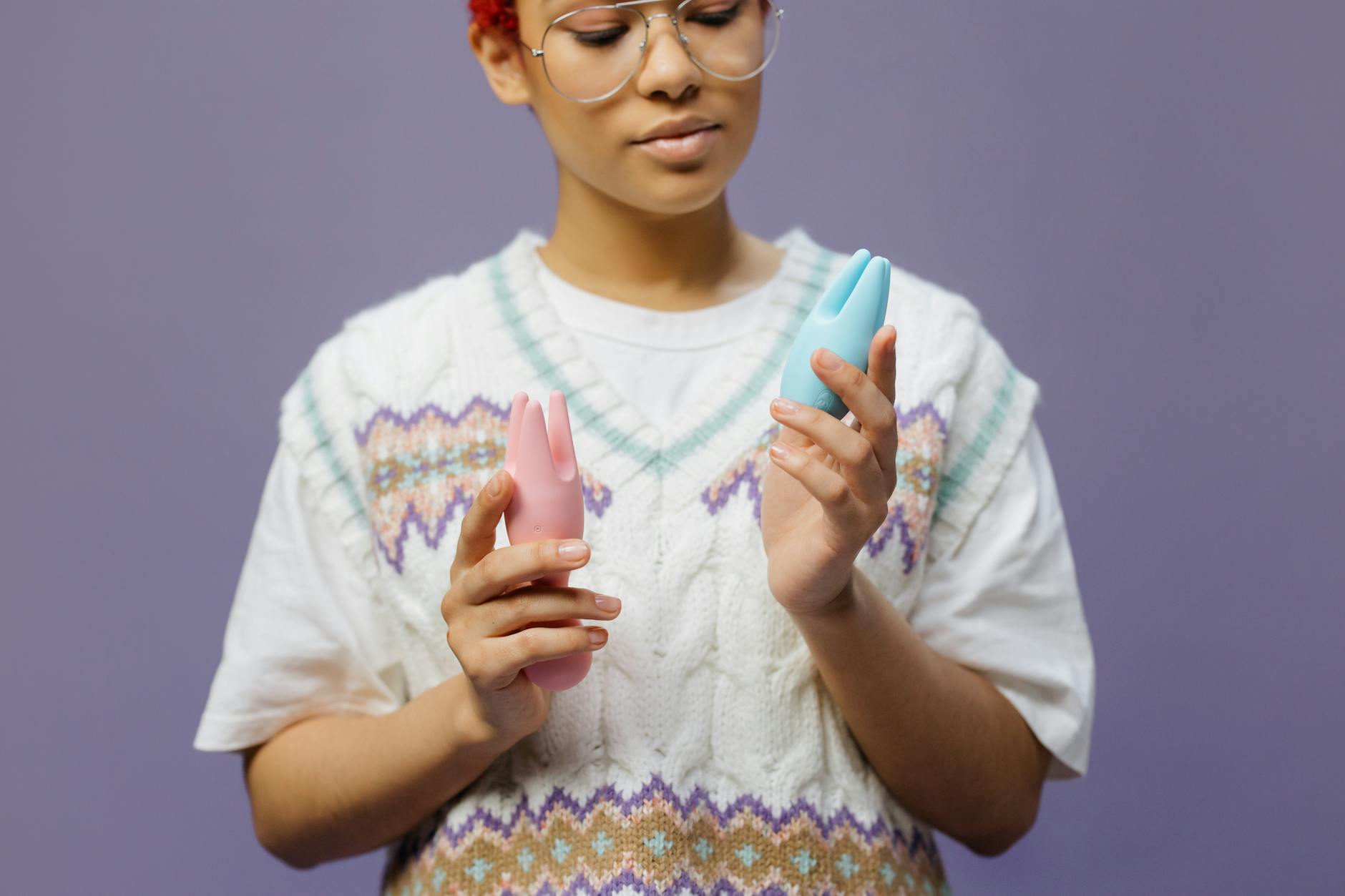
How birth control rewires your pleasure response
Let's be real. You start a new birth control. Within weeks, you notice your clitoris feels different. Maybe less responsive. Maybe almost numb to touch. Maybe overly sensitive in a way that feels raw instead of good. You're not imagining it. Your hormones just changed, and your clitoris is paying attention.
The clitoris is wildly sensitive to estrogen and progesterone levels. Most birth control methods suppress or alter these hormones to prevent pregnancy. That's the whole point. But nobody tells you that the clitoris is basically a hormone sensor, and it will absolutely notice. The good news? Once you understand what's happening, you can adjust how you use your Lemon vibrators and get back to pleasure that feels good.
What hormonal birth control actually does to clitoral sensation
Hormonal birth control works by lowering estrogen and adding synthetic progesterone (progestin). This prevents ovulation. But it also changes blood flow to the clitoris, reduces natural lubrication, and alters nerve sensitivity in the genital tissue.
Here's what you might feel:
Some people report their clitoris feels duller or farther away. The nerve endings are still there, but the hormonal environment makes them less responsive. Other people find their clitoris becomes hypersensitive. Touch that felt good before now feels sharp or uncomfortable. A few people experience no change at all. Bodies are wildly individual.
The timing matters too. If you're in the first 1-3 months of a new method, hormones are still stabilizing. Many people find sensitivity returns or stabilizes after the first cycle or two. If it's been six months and nothing has changed, that's when you might need a different approach or a different method.
Why clitoral vibrators require different settings when hormones shift
Lemon clitoral vibrators work by delivering precise stimulation to the clitoral glans and surrounding tissue. When hormones are in flux, the intensity level that used to work might feel wrong.
If your clitoris feels numb, you might think you need more intensity. Sometimes yes. But often what actually helps is longer warm-up time and patterns that build slowly rather than jump straight to high. Your nerve endings are there. They're just slower to activate. A clitoral vibrator like the Lem Sucker actually works better here than you'd expect because the suction pattern can stimulate deeper nerve tissue without direct friction.
If your clitoris feels hypersensitive, you need the opposite. Start at the lowest pattern setting. Use lots of lubrication. Keep sessions shorter. Your nerves aren't damaged. They're just firing more easily right now, and that sensitivity will settle.
Four things to do right now if birth control changed your pleasure
First: Wait a full cycle. Three months is the real reset period for most birth control methods. Your body is adjusting. Pleasure often returns without you doing anything different.
Second: Add lubrication even if you don't feel you need it. Birth control lowers natural lubrication. A water-based lube will help your Lemon vibrator glide better and reduce friction that might feel uncomfortable during this adjustment period.
Third: Extend foreplay time. Clitoral response takes longer to build on hormonal birth control. Instead of five minutes, budget fifteen. Your body isn't broken. It's just operating on a different timeline.
Fourth: Switch your vibrator settings. If you've been using pattern five on your clitoral vibrator, try patterns one through three for two weeks. Most people find the adjustment feels better at a different intensity level. This alone often solves perceived numbness.
The difference between numbness and actual reduced sensitivity
This matters because the fix is different for each one.
Numbness usually means the nerve activation threshold has shifted. It takes more stimulation to reach the point where pleasure registers. This responds well to longer warm-up time, slower build, and patterns that provide sustained stimulation. Many people find that switching from a quick session to a twenty-minute exploration with a Lemon vibrator actually feels better than the previous faster approach.
Actual reduced sensitivity is more subtle. You can feel stimulation. It just registers as less intense or less pleasurable. This is the hormonal environment at work. It usually returns once your body fully stabilizes on the birth control method. While you're waiting, you're not broken. You're just recalibrating.
Hypersensitivity is different again. Everything feels too intense. The solution here is lower intensity settings and shorter sessions. Your nerve endings are actually more reactive right now. You're not numbed. You're overactive. Paradoxically, less stimulation often feels better than more.
When to switch birth control methods because of pleasure changes
Here's the conversation nobody has. Some birth control methods are more likely to affect clitoral sensitivity than others.
Combination pills (estrogen plus progestin) tend to cause fewer pleasure changes than progestin-only methods like the mini-pill. The copper IUD doesn't change hormone levels at all, so it doesn't typically affect clitoral response. Hormonal IUDs release progestin directly into the uterus with minimal systemic absorption, so many people find them better for sensation than pills.
The implant and the shot deliver higher hormone doses and often have the most noticeable effect on clitoral sensation. If you're on one of these methods and pleasure hasn't returned after three months, talking to your doctor about switching is worth considering.
You don't have to accept numbness as the trade-off for effective contraception. There are options. Finding the right birth control method for both pregnancy prevention and pleasure takes some patience and honest conversation with a provider who takes sexual health seriously.
How to adjust your Lemon vibrator routine during this transition
Start lower than you think you need. If you usually use pattern three, try pattern one or two for two weeks. Notice what happens. Does pleasure return? Many people find they prefer the lower settings once they're used to them.
Use a dedicated warm-up pattern. Instead of jumping to the pattern you want, start at the lowest setting for five minutes. This primes nerve response and often makes subsequent patterns feel more intense.
Try longer sessions. Instead of five to ten minutes, explore for twenty. The longer time window gives your clitoris more chance to build response, which is especially helpful if sensation feels muted.
Experiment with positioning. Some positions give the clitoral vibrator better contact with the glans. Others give better contact with the internal structure around the clitoris. When sensitivity shifts, the positioning that felt perfect before might feel different. Adjust your angle and pressure.
Add external touch. Using your fingers alongside your Lemon clitoral vibrator can create a dialogue between sensation types. Sometimes the combination works better than the vibrator alone during hormone transitions.
FAQ: Birth control and clitoral sensitivity
How long does it take for clitoral sensitivity to return after starting birth control?
Most people see stabilization within three to six months. Some feel a shift within the first cycle. Everybody's timeline is different. If nothing has changed after six months, that method might not be right for you, and it's worth talking to your doctor about other options.
Can you use a clitoral vibrator while on birth control?
Absolutely. Birth control doesn't make vibrators unsafe. In fact, many people find that adjusting their vibrator use is exactly how they recalibrate pleasure during this transition. Lemon vibrators like the Lem remain safe and effective regardless of what birth control method you're using.
Does the type of birth control matter for clitoral sensation?
Yes, significantly. Combination pills tend to have less impact on sensation than progestin-only methods. The copper IUD doesn't affect hormones at all. If pleasure changes are a dealbreaker for you, talking to your doctor about switching methods is valid and important.
Should I use higher or lower vibrator intensity if my clitoris feels numb from birth control?
Counter-intuitively, try lower intensity first. Numbness usually responds better to longer warm-up time and sustained stimulation rather than maximum power. If lower intensity doesn't help after two weeks, then experiment with higher settings.
Can birth control permanently change clitoral sensitivity?
No. Once you stop the method or your body fully adjusts, clitoral sensitivity typically returns to baseline. The changes are real but reversible. Your clitoris isn't damaged. It's responding to a temporary hormonal environment.
Is it normal to feel nothing during pleasure after starting birth control?
It's common, and it's temporary. Some people experience this adjustment period. If you're feeling nothing after six months and nothing has changed, that's the signal to explore other birth control options with your doctor. You shouldn't have to choose between effective contraception and pleasurable sensation.
The real conversation
Birth control is a medical choice that prevents pregnancy. It shouldn't eliminate pleasure. If a method is creating problems with sensation or arousal that aren't resolving after a reasonable adjustment period, that's information. You have options. A good healthcare provider will take sexual health seriously as part of reproductive health. If yours doesn't, finding one who does is worth the effort.
Meanwhile, your Lemon vibrators are still your friends. You might just need to have a different kind of conversation with them while your hormones settle. That's not failure. That's adaptation. And your pleasure absolutely matters enough to put in the work.