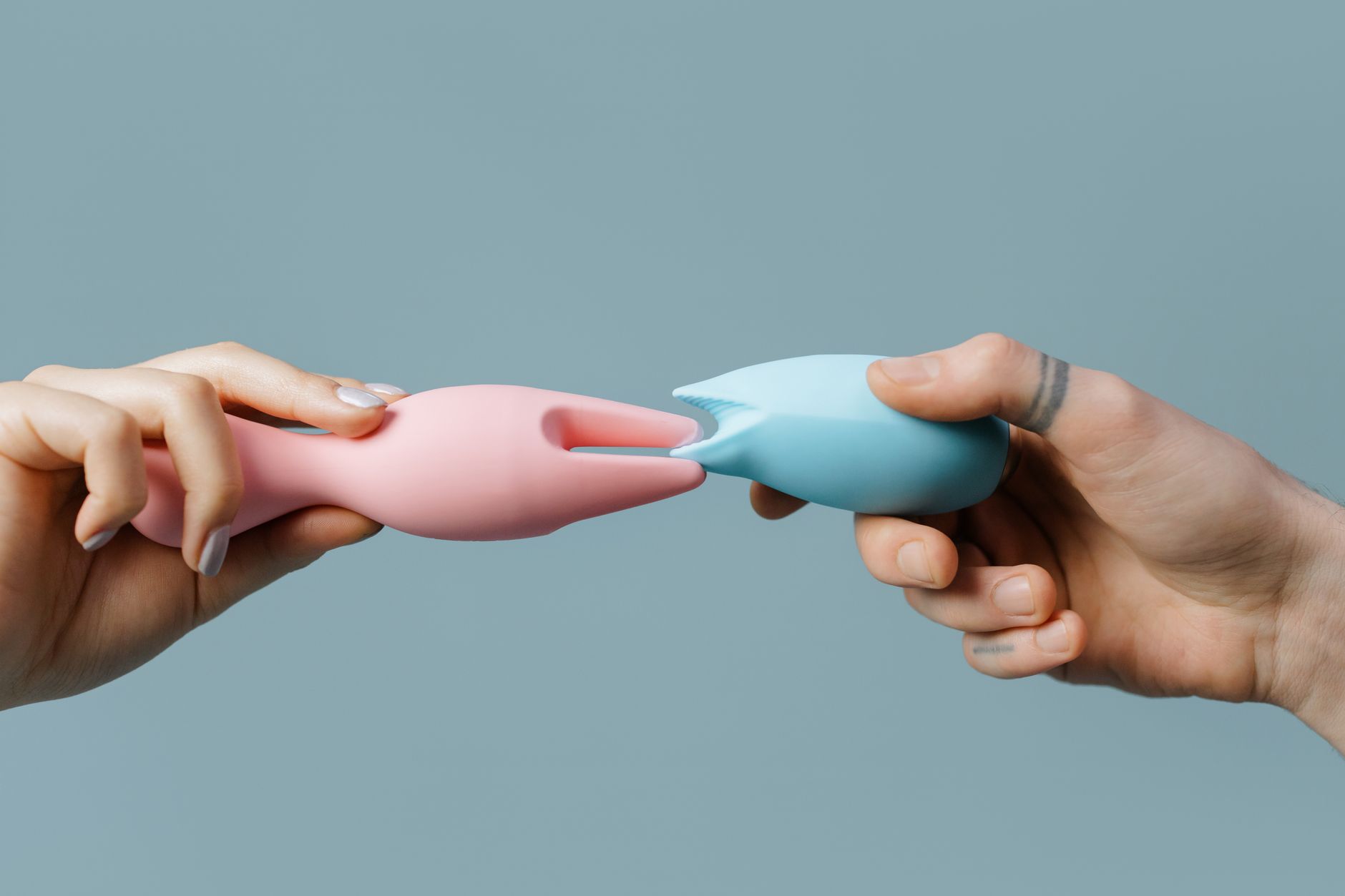
Let's talk about muted sensation
Your body isn't responding the way it used to. Touch that once felt electric now feels like background noise. You're not broken. But something has shifted, and you're probably wondering if you can get that intensity back.
Muted sensation during sex is wildly common—and wildly underdiagnosed. Most people assume it's a permanent feature of their body, when actually it's almost always a fixable signal that something upstream needs attention.
What causes sensation to feel muted
There are several reasons why stimulation that once worked no longer cuts it.
Desensitization from repetition. Your nervous system adapts to consistent input. If you've been using the same touch, the same rhythm, the same everything for months, your brain stops registering it as novel. This isn't laziness. It's neurology. Your somatosensory cortex has basically said, "I've got this data already, we can tune it out."
Stress and cortisol overload. When you're running on adrenaline—from work, caregiving, relationship tension, illness—your parasympathetic nervous system (the one responsible for pleasure) gets muscled out. Cortisol floods your system and pleasure signals get drowned out. Your body is literally too stressed to feel.
Medication side effects. Antidepressants, antihistamines, beta-blockers, and birth control can all blunt sensation. So can certain blood pressure medications. If sensation shifted when a new prescription started, that's your signal to check with your doctor.
Pelvic floor dysfunction. A too-tight pelvic floor creates a kind of sensory static. Tension blocks nerve signals. You might feel numb, or you might feel pain instead of pleasure. It's the same root issue.
Hormonal fluctuation. Estrogen, progesterone, and testosterone all affect nerve sensitivity. When any of those shift—whether from your cycle, perimenopause, or hormonal contraception—sensation changes. This is temporary but real.
Physical numbing. Direct vibration on the same spot for 10+ minutes literally numbs tissue. This is called vibratory habituation and it's physiological, not psychological.
Why clitoral vibrators work differently than your hands
Here's the thing: your hands and a clitoral vibrator aren't doing the same job.
Your fingers give sustained pressure and rhythm. A lemon clitoral vibrator like the Lem gives rapid, pulsing stimulation that penetrates tissue differently. The vibration pattern activates different nerve fibers than manual touch does. When sensation feels muted to touch, vibration often wakes things up because it's hitting a different sensory pathway.
The Lem's suction-based design is particularly useful here. Instead of direct friction on already-dulled tissue, suction creates a pressure change that stimulates deep nerve clusters. It feels like a gentler entry point when sensation is compromised, yet delivers more total stimulation energy than fingertip contact.
How to restart sensation when it feels stuck
Start with low intensity and absolute novelty.
Set the Lem to pattern 1 or 2. Not because you need gentleness, but because low intensity forces your nervous system to pay attention. High intensity on numb tissue doesn't wake anything up. It just creates a wall of overstimulation that your brain filters out.
Approach from an angle you haven't tried. If you've always stimulated directly, try approaching from the side. Try pulling the skin taut and stimulating the exposed tissue. Try using it through underwear. Novelty resets the adaptation clock.
Build anticipation without jumping to the tool.
Many people with muted sensation skip foreplay entirely because "it doesn't work anyway." That's exactly backwards. Spend 15-20 minutes on everything except the Lem. Kissing, touch, attention, eye contact, imagination. Let arousal build naturally. Then introduce the vibrator. You're priming the nervous system, not just the tissue.
Alternate stimulation patterns.
Don't stay on one pattern for more than 5-8 minutes. Cycle through patterns 3, 5, 2, 1, back to 3. Your nervous system stops filtering out novelty. Each pattern shift feels like new input. This is called "stimulus variation" and it works because your brain has to keep paying attention.
Change position and angle.
Even a small shift—knees bent instead of straight, lying on your side instead of your back, hips tilted—changes how the vibration reaches nerve clusters. Every angle is technically new input. Move every 3-4 minutes. You're not chasing the right spot. You're refusing to let your nervous system get comfortable.
Use lube, even if you don't think you need it.
Water-based lube isn't just about comfort. It changes the acoustic properties of the vibration. It also lets the toy move slightly rather than staying in one rigid spot, which keeps sensation fresh. Try it once and you'll feel the difference immediately.
When sensation is stress-related
If you've noticed muted sensation ramping up alongside work deadlines, family crisis, or relationship friction, the vibrator is not your first intervention.
You need the parasympathetic nervous system offline and functioning. That means: sleep (non-negotiable), movement (walking, dancing, yoga—30 minutes), time away from screens and news, and ideally therapy to process whatever's creating the cortisol bath.
The Lem works best when your baseline stress load is manageable. If you're running at an 8/10 stress level, a vibrator will feel like a frustration tool rather than a pleasure tool. Get the stress down to a 4 or 5, then revisit.
When it's medication or hormones
If sensation shifted when you started a new prescription, talk to your doctor before assuming the medication is the culprit. Often it's not. But if it is, sometimes the timing of the dose helps (taking it at night instead of morning), or a different medication in the same class works differently.
Similarly, if sensation is tied to your cycle, track it for two months. You might find a sweet spot window where sensation is sharper, and you can plan accordingly. Some people find that using the Lem in the follicular phase (after period, before ovulation) yields different results than the luteal phase.
The pelvic floor angle nobody mentions
If muted sensation comes with pain, pressure, or a need to "brace" during sex, your pelvic floor is likely tight.
Kegels make this worse. Instead, try reverse Kegels: lie down, breathe in, and on the exhale imagine the pelvic floor releasing downward like an elevator descending. Hold for 5 seconds. Repeat 10 times, three times daily. Pair this with the Lem at low intensity. As the pelvic floor releases, sensation comes back online.
Rebuilding sensation takes time
If muted sensation has been there for months or years, it won't snap back in one session. But it will rebuild. Most people report noticeable shifts within 2-3 weeks of consistent variation, novelty, and the right tool.
The Lem works particularly well for this because the patterns give you infinite novelty without buying six different toys. You're not looking for the right vibrator. You're looking for the right rhythm tonight, which might be different tomorrow.

Photo by cottonbro studio on Pexels
FAQ: Muted sensation and vibrator use
Why does high intensity feel worse than low intensity when sensation is muted?
When tissue is desensitized, high intensity doesn't penetrate deeper. It creates a numbing effect on top of existing numbness. Your nervous system perceives it as a wall rather than a signal. Low intensity forces your brain to pay attention, which reactivates the sensory pathways. Think of it like trying to hear a whisper in a noisy room versus hearing one in silence.
Can I use a Lemon clitoral vibrator if I'm on antidepressants that blur sensation?
Yes, but timing and technique matter. Many people on SSRIs find that vibration works better than manual stimulation because it's hitting different nerve pathways. Start at low intensity, use high novelty and pattern variation, and give yourself at least 2-3 weeks before deciding whether it's working. Also talk to your prescriber—sometimes dosing timing or switching to a different medication class helps without losing the mental health benefits.
How long should I use a vibrator each time if sensation feels stuck?
Start with 10-15 minute sessions maximum. Beyond 15 minutes on any single pattern, vibratory habituation kicks in and tissue starts to numb. If you need more stimulation, switch patterns or take a 5-minute break, don't just push harder. Quality beats duration here.
Is muted sensation a sign I need a stronger vibrator?
Usually not. More power on numb tissue is like turning up the volume on a frequency you can't hear. You need novelty, variation, and technique adjustment more than raw intensity. Many people find that a tool like the Lem with smart pattern design works better for muted sensation than a "powerful" wand-style vibrator.
Can stress actually kill my ability to feel pleasure?
Not permanently, but yes, absolutely. Chronic stress keeps your nervous system in fight-or-flight mode, which suppresses parasympathetic function. That's where pleasure lives. Sensation returns when stress load drops. If you're in a high-stress phase, acknowledge that pleasure might be lower-priority biologically. The Lem will still be there when life settles.
What if muted sensation happens only with a partner but not alone?
That's relationship stress or performance anxiety, not a physical problem. Your nervous system feels safe enough alone to access pleasure pathways, but unsettled with a partner. This is fixable through communication, reassurance, and sometimes therapy. The vibrator is useful as a tool to practice pleasure in a lower-pressure context, then gradually integrate with a partner.
Sensation comes back
Muted pleasure is one of the most fixable sexual concerns. It looks permanent when you're in it, but it almost never is. The right combination of novelty, technique, stress management, and a clitoral vibrator like the Lem brings sensation back online.
If you're struggling with this, know that you're not broken, and there's no timeline you should be on. Your nervous system will respond when the conditions are right. Explore the techniques that work for your body, and give yourself permission to experiment.