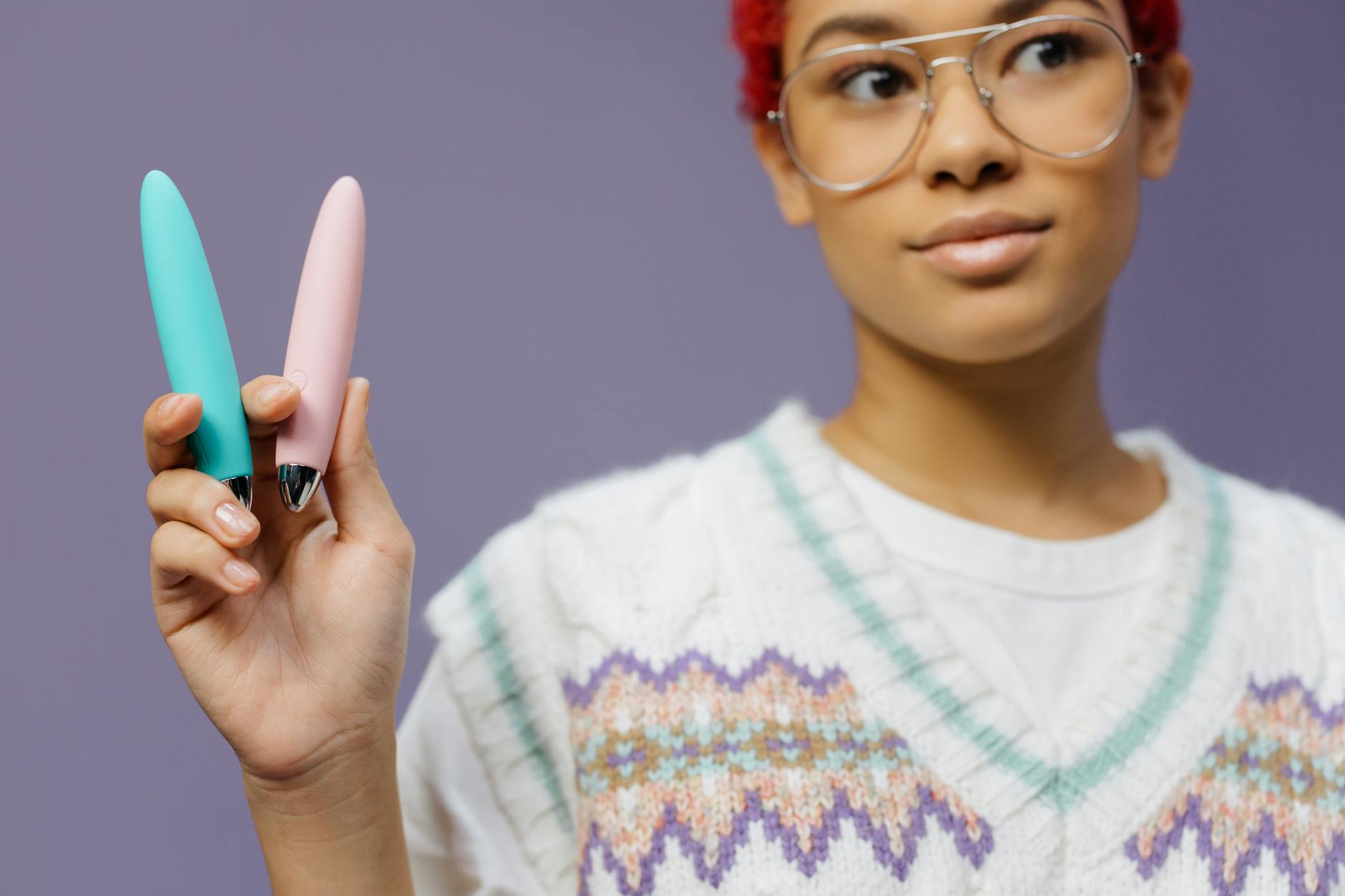
Let's talk about your cycle and pleasure
Here's what nobody tells you about clitoral sensitivity: it's not a fixed setting. Your nerve endings don't respond the same way on day 3 of your cycle as they do on day 14. Around ovulation, when estrogen peaks, your clitoral tissue swells slightly, blood flow increases, and nerve endings become more responsive. This is physiologically real, and it changes how pleasure feels.
If you've noticed your lemon vibrators feel more intense mid-cycle, or that you want different settings depending on the week, you're not imagining it. Your body is literally more sensitive. The question is: how do you use that knowledge to actually enjoy your pleasure, instead of just white-knuckling through overstimulation?
What happens to sensation during ovulation
Estrogen rises in the days leading up to ovulation. This increase in estrogen does three specific things to clitoral tissue:
First, blood vessels dilate. More blood flows to the clitoris, which makes it more engorged and more sensitive to touch. This is the same mechanism that makes breasts tender mid-cycle, except it's happening in tissue that's designed for pleasure.
Second, the clitoral hood (the skin covering the clitoris) becomes more responsive. This means even light pressure feels stronger than it would on other days of your cycle. A setting on your lemon clitoral vibrator that feels perfect during your period might feel harsh at ovulation.
Third, arousal builds faster. Your nervous system is already primed. What might take 20 minutes to build during menstruation can happen in 10 minutes mid-cycle. This is why timing your pleasure around your cycle isn't vanity or superstition. It's biomechanics.
Why your usual settings feel different
Most people don't connect the dots between hormonal shifts and how their toys feel. You might blame the vibrator, assume you're getting used to it, or think something is wrong with you. None of those things are true.
What's actually happening: your clitoral tissue has more elasticity mid-cycle. The tissue itself is slightly thicker because of increased blood flow. This means when you use the same intensity setting on your lemon vibrators that you use during other parts of your cycle, the pressure distributes differently across the nerve endings. It feels more intense not because the vibrator changed, but because your body did.
This is also why people sometimes report that intensity seems to decrease with consistent use. They're not experiencing desensitization. They're experiencing a normal cycle. They use the toy at the same setting for three weeks, then hit ovulation and it suddenly feels too strong, so they assume they've worn out their sensitivity. Then post-ovulation it feels normal again, and they think their body healed. What actually happened is their cycle shifted.
How to adjust your technique mid-cycle
Here's the practical part. Around day 12-14 of a standard 28-day cycle (though yours might be different), start paying attention to how your clitoris responds.
Start lower. If you usually begin on pattern 3 or 4 with your lemon vibrators, move down to pattern 2 during ovulation week. You can always increase intensity. You can't un-feel overstimulation, and dealing with it kills the whole experience.
Increase warm-up time even more. I recommend 15-20 minutes of external stimulation before you jump to direct clitoral contact. During ovulation, extend that to 20-30 minutes. Your body is primed to respond quickly, but that doesn't mean you should rush. Slow builds create better orgasms regardless of cycle phase.
Use the positioning trick. If direct vibration feels too intense, angle your lemon clitoral vibrator slightly so the stimulation hits the sides of the clitoris rather than the head. The tissue is sensitive everywhere, but the sides have slightly fewer nerve endings concentrated in a small area. This distributes pressure more comfortably while still delivering strong sensation.
Alternate pattern. Instead of staying on one pattern, switch between two patterns every 30-60 seconds during ovulation. Pattern 1 for 45 seconds, then pattern 3 for 45 seconds, then back to pattern 1. This prevents overstimulation and keeps sensation fresh.
The pleasure flip side
Overstimulation is one problem. Undersensitivity is the other, and it's actually more common than people admit. If you usually use a specific pattern on your lemon vibrators and it suddenly feels weak during ovulation, you might actually need a bit more intensity, not less.
If this is you, bump up the pattern by 1 and see how it feels. Sometimes mid-cycle, the tissue responds so quickly that you need a stronger signal to feel that edge of intensity that creates good orgasms. Your body isn't being difficult. It's literally wired differently at this point in your cycle.
Here's what helps: use the pattern-switching technique in reverse. Go pattern 5 for 30 seconds, then down to pattern 2 for 30 seconds. The contrast actually amplifies sensation. It's like the difference between listening to music at one volume all the time versus turning it up and down. The dynamic variation creates the response.
Tracking what works for you
This is where most people skip ahead, and I'm going to ask you not to. Spend one cycle tracking three things: the day of your cycle, the pattern you used, and whether it felt right or oversensitive or underwhelming. You can use your phone calendar, a spreadsheet, or a period app. It takes 30 seconds per session.
By the end of one full cycle, you'll have a roadmap. You'll know that mid-cycle, pattern 3 is your baseline and you can push to pattern 4 if you want intensity. Or you'll know that ovulation week needs pattern 1 or 2 because your body is already so responsive. Or you'll realize your oversensitivity isn't ovulation-related, it's actually happening in the luteal phase (the two weeks after ovulation), which changes the whole strategy.
This isn't obsessive. This is just information. The better you know your own body, the better you can use tools like lemon vibrators to actually enjoy yourself.
When to check in with a provider
If your sensitivity shifts are so extreme that you're experiencing pain rather than just undersensitivity or oversensitivity, it's worth mentioning to your doctor or a gynecologist. Some underlying conditions like endometriosis or PCOS can cause pain during certain cycle phases, and that's different from normal hormonal fluctuation.
Also, if you're on hormonal birth control, your cycle sensitivity might look completely different because your hormones aren't fluctuating the same way. If you're on the pill, the hormone levels stay relatively stable all month, which means that mid-cycle sensitivity peak might not exist for you. If you're using an IUD, the pattern might be different depending on whether it's hormonal or copper. None of these variations are wrong. They're just information you can use to adjust how you use your pleasure tools.
People also ask
Does ovulation make orgasms easier to achieve?
Yes, typically. The combination of increased blood flow, heightened nerve sensitivity, and the hormonal environment around ovulation makes it easier to achieve orgasm for most people. Your body is literally set up to be more responsive mid-cycle. That's the biological point of the cycle. The challenge is managing that increased sensitivity so it feels good instead of overwhelming.
Can I use lemon vibrators differently on different cycle days?
Absolutely. This is exactly what you should do. You wouldn't wear the same amount of clothing in July and January. You shouldn't use your lemon clitoral vibrator at the same settings all month. Your body changes, your needs change, your pleasure preferences change. That's not a bug. That's the feature.
Why does my sensitivity feel dull right before my period?
Progesterone is high in the luteal phase (the 14 days after ovulation). Progesterone is a calming, grounding hormone. It's designed to prepare your body for either pregnancy or menstruation. Higher progesterone means lower arousal baseline and less acute sensitivity. You might need higher intensity settings, more warm-up time, or a different approach altogether. This is normal, and it's very different from the sensitivity pattern during ovulation.
Should I avoid using lemon vibrators during ovulation if sensation is too intense?
No. Avoiding your pleasure because your body is responding strongly is not the solution. Instead, adjust your technique. Lower intensity, longer warm-up, angle variation, and pattern switching all help you stay engaged without overstimulation. If you find that no adjustment works and you're consistently having painful experiences mid-cycle, that's worth talking to a healthcare provider about.
Does lube help with ovulation oversensitivity?
Yes, sometimes. Even though you might have more natural lubrication mid-cycle due to increased blood flow, adding a water-based lube can reduce friction and make everything feel less sharp. It also helps if you're using your lemon vibrators with a partner and want to reduce direct intensity. Lube is one of the easiest ways to modulate sensation without changing the tool itself.
Can I predict when I'll feel most sensitive with a vibrator?
Generally, yes. Peak sensitivity happens about one or two days before ovulation and one or two days after. If you have a regular 28-day cycle, that's roughly days 12-16. But cycles vary. If yours is 26 days or 32 days, the timing shifts. Apps that predict ovulation based on your cycle length can help you identify when to expect the shift. Paying attention to your own body signals matters more than any app. If you notice increased clitoral awareness, slight swelling, or that your usual settings feel intense, you're probably mid-cycle or close to it.
Your pleasure deserves attention
Using lemon vibrators well means using them in sync with your body, not against it. Mid-cycle sensitivity isn't a problem to manage. It's information. The more you pay attention to how your body changes across your cycle, the better you can use pleasure tools that actually work for you, week to week.
If you're curious about how your cycle affects other aspects of pleasure or intimacy, exploring that pattern is worth doing. And if you have questions about your specific body or cycle, reaching out to a healthcare provider who takes pleasure and sexuality seriously is always an option.
Your pleasure matters. Your cycle matters. And the way your body responds to stimulation mid-cycle is just one more thing that makes you worth paying attention to.