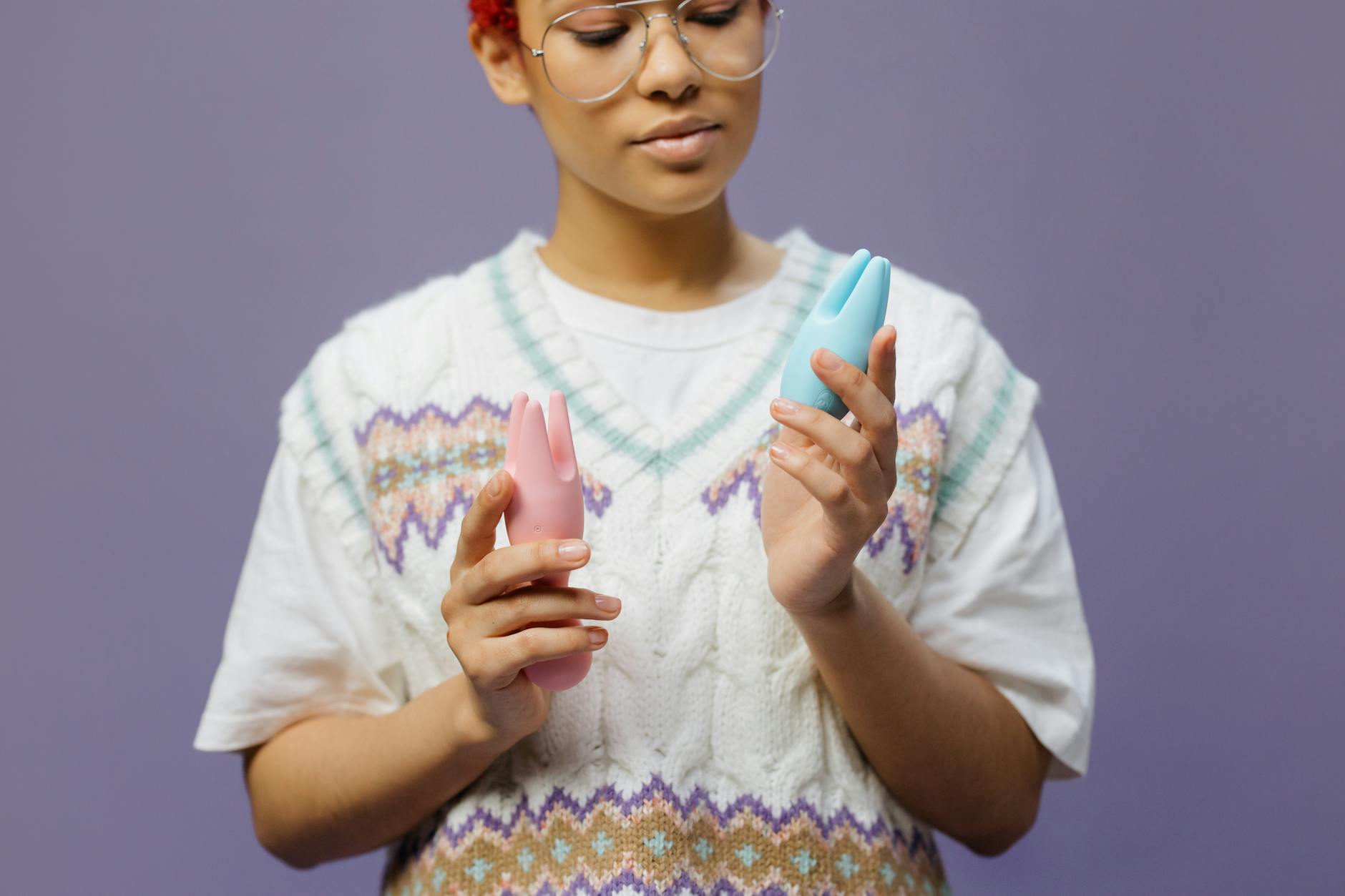
How to Use Lemon Vibrators When You Have Vaginismus or Penetration Pain
Let's be real: if penetration hurts or feels impossible, almost all the pleasure advice out there feels like it's written for someone else's body. Vaginismus is real. Vulvodynia is real. The pelvic floor tightening involuntarily is real. And the fact that your body is protecting itself doesn't make it any less frustrating.
Here's the part nobody tells you clearly: clitoral pleasure doesn't require penetration. And clitoral vibrators like Lemon toys work entirely differently from anything designed for internal use. They're not a compromise version of pleasure. For many people with penetration pain, they're actually the gateway back to orgasm without the guarding, without the pain, without the pressure to "fix" yourself first.
What vaginismus actually does to pleasure
Vaginismus is involuntary pelvic floor muscle tension. When arousal happens or penetration is anticipated, your pelvic floor tightens as a protective reflex. This isn't psychological weakness. It's not something you're doing wrong. It's your nervous system reading penetration as a threat and responding logically by saying no.
The problem is that this same protective tension kills pleasure. It narrows the sensations available to you. It teaches your body that arousal leads to discomfort, so over time, arousal itself becomes harder to access. The cycle gets tighter.
Penetration pain also creates anticipatory anxiety. Your brain learns: "This might hurt." Before anything even happens, your body is already braced. That's not a character flaw. That's smart biology working against you.
Why clitoral vibrators bypass the pain cycle
Here's the crucial difference: clitoral vibrators like Lemon toys stimulate the external clitoris. They don't require your pelvic floor to relax. They don't trigger the protective reflex. They don't ask your body to do anything it's not ready for.
Most importantly, they give you direct, powerful sensation without the anticipation of pain. Your nervous system doesn't have to brace. Your pelvic floor doesn't have to tighten in advance. You can simply... feel.
For people with vaginismus, this matters wildly. Many of my clients report that using a clitoral vibrator is the first time in years they've experienced pleasure without simultaneous pain or dread. Some have orgasms for the first time since their pain condition started. Others use clitoral pleasure as the foundation for healing, coming back to penetration later (or never, which is also fine) from a place of confidence rather than pressure.
Starting slow when touch itself feels loaded
If you have penetration pain, you might also be dealing with something else: touch anxiety. The closer something gets to your genitals, the more your nervous system might protest. This is normal and common.
Start with the vibrator over your clothes. Seriously. Your clitoris is external. You can stimulate it through underwear, through pants, through anything. This removes the layer of genital exposure that might be triggering, while letting you explore the sensation and what rhythm feels good.
Spend time here. Days, weeks, however long feels right. There's no timeline. You're teaching your nervous system that vibration equals safety and pleasure, not pain.
When you're ready, try direct contact on external labia or on the clitoris itself with the vibrator. Still no penetration. Still no internal pressure. You're just exploring external sensation.
The rhythm question: intensity, pattern, duration
With vaginismus, your first instinct might be to keep intensity low. That's not always the answer.
Some people find that very low intensity feels ticklish and triggers tension rather than release. A stronger, clearer sensation can actually feel safer. Your clitoris has dense nerve tissue. A good clitoral vibrator like Lemon's designs gives you focused, consistent stimulation that your nervous system can understand and respond to, rather than fussy light sensation that keeps your body guessing.
Start with whatever intensity feels interesting, not painful. If low feels right, excellent. If pattern three on a Lemon vibrator feels better than pattern one, that's also excellent. Your body knows what it needs.
Duration matters too. Don't rush to orgasm. Many people with pain conditions find that the goal-oriented pressure of "trying to come" makes the nervous system tighten again. Instead, use the vibrator for exploration. Five minutes. Ten minutes. Twenty if you want. Notice what feels good. Notice where your mind goes. Notice when your pelvic floor relaxes (it will, sometimes).
When to involve a partner (or when not to)
If you have a partner, this is a conversation. Not during sex. Not when things feel tense. A separate, clothed, non-sexual moment where you say something like: "I want to explore pleasure in a different way right now. I'm going to use a vibrator. I might want you to be in the room. I might want privacy. I'll let you know."
Some people find that a partner's presence creates pressure. Other people find it comforting. Both are valid. You get to decide what serves your nervous system.
If you do want your partner involved, the vibrator can be something you use together, or something you use while they're present but not involved. You're not performing. You're exploring. The goal is your pleasure, not their participation.
Pelvic floor PT and vibrators together
If you're seeing a pelvic floor physical therapist (which I recommend for vaginismus), tell them you're using a clitoral vibrator. A good PT will see this as helpful, not competing. The vibrator gives your pelvic floor practice relaxing during arousal. That's exactly what pelvic floor therapy is trying to teach your body to do.
Some PTs will even integrate vibration into sessions. Others will suggest you use it at home between appointments. Either way, you're not choosing between vibrator and therapy. You're using both as tools for the same goal: teaching your body that arousal and relaxation can happen together.
What happens if you feel pain during vibration
Stop. Your body is telling you something. Pain during clitoral vibration is less common than pain during penetration, but it happens. It usually means one of three things:
Your pelvic floor is still protecting. Take a break. Try again tomorrow. Or use the vibrator over clothes for longer before moving to direct contact.
The vibrator is hitting a spot that feels wrong. Move it slightly. Angle it differently. The clitoris is bigger than the visible external part. You might need to find the right spot.
You're experiencing a flare of your pain condition. Some days are harder than others. Use the vibrator on easier days. On hard days, rest.
Pain is not a failure. It's data. Honor it.
Solo exploration vs. partner dynamics
Many people with vaginismus benefit from starting with solo play. No partner expectations. No pressure to perform. No one else's timeline or nervous system to worry about. Just you, a Lemon vibrator, and whatever feels good in that moment.
Solo pleasure also teaches you about your own body's responses. What rhythm works. What intensity. What mental state you need. When you understand yourself this way, partnered sex becomes easier to navigate because you know what you're asking your body to do.
If you eventually want penetrative sex with a partner, solo clitoral pleasure first is excellent groundwork. You've already proven to your nervous system that sexual pleasure is possible without pain. That's powerful.
When to see a specialist
Vaginismus often needs help beyond a vibrator. A pelvic floor physical therapist is the gold standard. Some people also benefit from somatic therapy or sex therapy. Your GP can refer you, or you can find a PT through the International Pelvic Pain Society.
If you're experiencing sharp, burning, or stabbing pain, get checked for vulvodynia or other pain conditions. They're treatable. You don't have to white-knuckle through.
If the pain is paired with anxiety, grief, or trauma history, therapy matters. A vibrator is a tool for physical sensation, not a substitute for processing what your body has been through.
The patience part
Honestly, the hardest part of using Lemon toys or any vibrator with vaginismus isn't the technique. It's giving yourself permission to go slowly. Your nervous system learned to protect you for a reason. Unlearning that takes time. Some people move quickly. Others take months or years. Both timelines are healing.
Your pleasure matters. Your body's safety matters. They're not contradictory. A good clitoral vibrator honors both at the same time.
People also ask
Can I use a clitoral vibrator if penetration is painful?
Absolutely. Clitoral vibrators don't require penetration. They stimulate external tissue that doesn't trigger the protective pelvic floor response. This makes them often safer and more pleasurable for people with vaginismus or penetration pain.
Will using a vibrator make vaginismus worse?
No. A clitoral vibrator doesn't put pressure on your pelvic floor muscles. In fact, it can teach your body that arousal and relaxation are possible together, which is part of what pelvic floor physical therapy tries to achieve. Penetration would be different, but clitoral stimulation is generally safe.
How long does it take to feel pleasure again after penetration pain?
It varies. Some people experience pleasure within days of trying clitoral vibration. Others take weeks or months. This depends on how long you've had pain, your nervous system's readiness, and what else is happening in your healing. Pelvic floor PT speeds things up for many people.
Is it normal to feel nothing with a vibrator at first?
Yes. If your nervous system is in protection mode, sensation can feel muted or absent. Keep exploring without expectation. Numbness sometimes resolves as your body learns that pleasure is safe. If it persists after several weeks, talk to your pelvic floor PT.
Can I use a vibrator while doing pelvic floor physical therapy?
Yes. In fact, many pelvic floor PTs recommend it. The vibrator gives your body practice relaxing during arousal, which is exactly what therapy is trying to teach. Let your therapist know you're using one so they can incorporate it into your plan.
Should I tell my partner I'm using a vibrator for pain management?
If you have a partner, yes. Frame it as part of your healing, not as something they've done wrong. Many partners feel relieved to know there's a concrete tool that helps. It can also take pressure off them to perform or avoid touching you "wrong."