Your libido didn't vanish. It just shifted gears.
Honestly, the biggest lie about turning 40 is that desire disappears. It doesn't. What actually happens is messier and more interesting: your body and brain reorganize their priorities, and what used to trigger automatic arousal suddenly requires more intention. That's not a malfunction. That's a transition.
The research backs this up. Studies show that sexual desire doesn't drop off a cliff in your 40s and 50s. Instead, it becomes more contextual. Stress, relationship dynamics, body image, hormonal fluctuations, and sometimes just the weight of daily life compress desire down to something that feels like nothing. But it's still there.
Here's what I want you to know: a lower libido after 40 is not a personal failing. It's also not permanent. And it's absolutely responsive to the right tools and approach.
What actually changes at 40
Your body is doing several things simultaneously, and most of them have nothing to do with "aging."
Hormonal shifts matter, but they're not destiny. Estrogen and testosterone both gradually decline starting in your late 30s. This changes how fast you respond to stimulation and how intense that response feels. But the neural pathways for pleasure don't go anywhere. Your clitoris still has the same nerve density. Your capacity for orgasm is still there.
Stress rewires desire. By 40, many people are managing the peak demands of career, caregiving, relationships, or single life. Chronic stress suppresses dopamine and increases cortisol, which basically tells your body "now is not the time for pleasure." Your brain isn't wrong. It's protecting you from something it thinks is more urgent.
You're more aware of what doesn't work. This is actually progress. In your 20s and 30s, sometimes arousal happened almost reflexively. At 40, you know better. You've had enough experiences to recognize when something feels rushed, when a partner isn't attuned to what you need, or when the whole dynamic just doesn't land. That clarity kills automatic desire. It also makes desire, when it does show up, much more genuine.
Your body needs different warm-up time. Arousal doesn't switch on as fast as it used to. This isn't because anything is broken. It's because your tissues need more blood flow to reach baseline sensitivity, and your nervous system needs a longer ramp-up. Budget for it, and the experience often becomes deeper than it ever was.
Why a clitoral vibrator changes everything
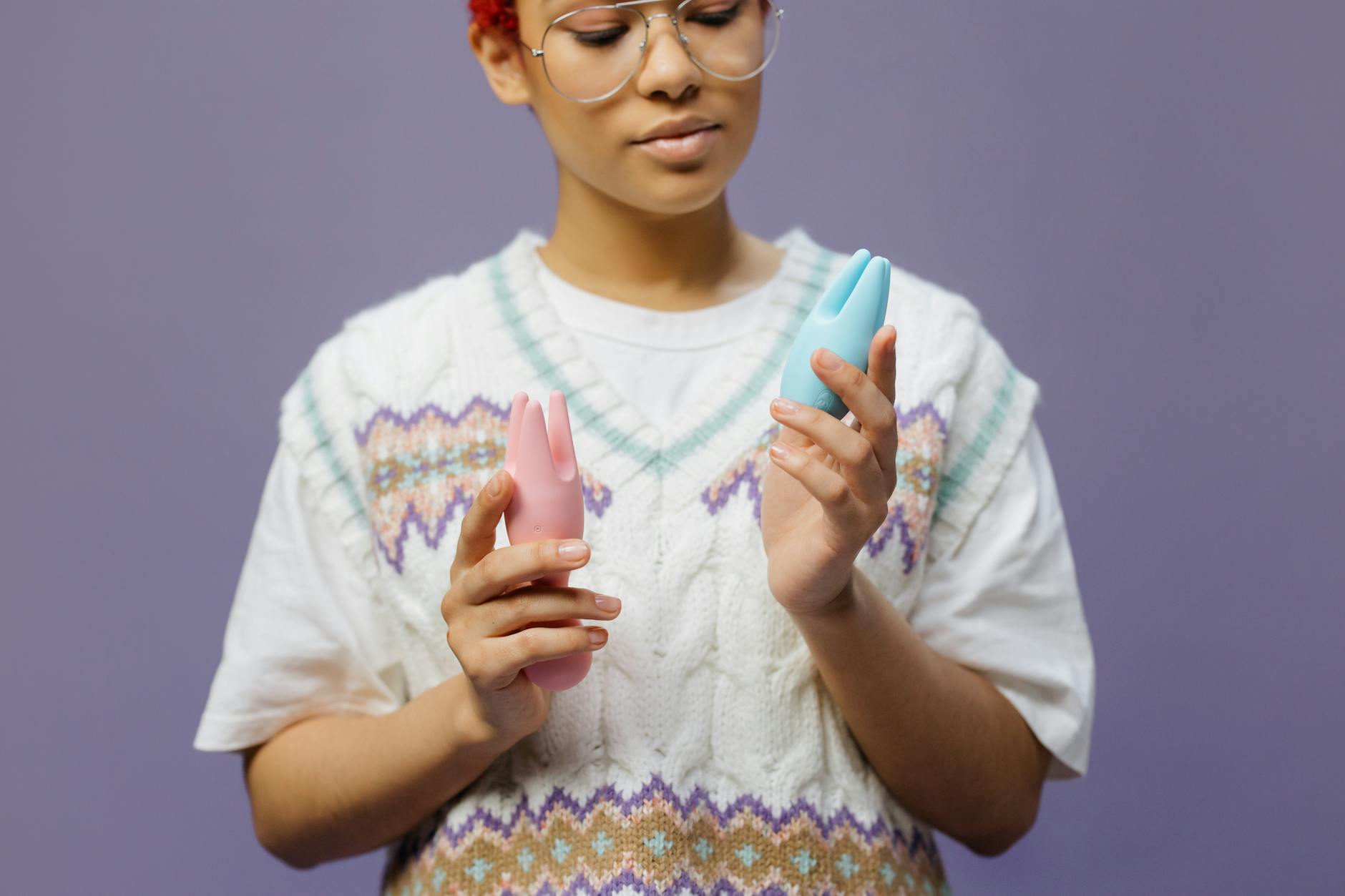
Lemon clitoral vibrators work particularly well for the 40-plus libido because they bypass the need for the automatic arousal response and focus intensity exactly where it needs to go.
Here's the practical difference: when desire is low, you might not feel much from standard touch. Your partner might not be hitting the right spot or using the right pressure. Manual stimulation takes longer and can feel inconsistent. With a lemon vibrator, you're offering your body a direct signal. The stimulation is consistent, intense, and anatomically precise.
This matters psychologically too. Using a clitoral vibrator signals to your brain that you're choosing pleasure. You're not waiting for desire to arrive like a guest who might not show up. You're building the conditions for it, which paradoxically often triggers the desire response more reliably than waiting passively.
The three-phase approach to rebuilding libido
Phase 1: Solo exploration (weeks 1-3)
Start alone. This removes the pressure of performing for someone else, which is often the largest invisible barrier to desire at 40 plus. Begin with a clean, charged lemon clitoral vibrator in a comfortable, private space with minimal distractions. No goal of orgasm. Just exploration.
Start at the lowest intensity setting. The goal is to rebuild your awareness of what your body actually wants, not to achieve anything. Spend 10-15 minutes noticing what feels good, what feels neutral, what feels too intense. You're gathering data.
After a few sessions, you'll notice patterns. Maybe intensity 3 feels better than intensity 1. Maybe you need 20 minutes, not 5. Maybe you prefer stimulation in a particular pattern. Write it down or just remember it. This is the information that will actually help you communicate with a partner later.
Phase 2: Reconnection with context (weeks 4-6)
Once you've rebuilt familiarity with your own pleasure, think about context. What conditions help desire appear? For many people at 40, it's not "romantic mood lighting." It's honestly mundane stuff: not being exhausted, not having three things on your mental to-do list, having taken a shower, having eaten, having had coffee.
Optimize for those first. Then introduce the lemon vibrator into partnered time if that's relevant for you. This isn't about performance. It's about communication. You're showing your partner what works for your body right now, at this age, at this moment in your life.
If you're single, this phase is just about deepening your own practice. Longer sessions. More exploration of what intensity and rhythm actually feel good.
Phase 3: Integration and expansion (week 7 onward)
By now, you've rebuilt your baseline awareness of pleasure. The next phase is integrating that awareness into your actual life. For some people, that means using a lemon clitoral vibrator as part of regular solo practice. For others, it means using it with a partner. Some people do both.
The key shift here is from "rebuilding" to "sustaining." This isn't about trying to become the version of yourself who had spontaneous desire at 25. It's about building a sustainable practice that honors how your body and life actually work at 40.
The role of conversation (yes, really)
If you have a partner, the libido conversation often matters more than the vibrator conversation. Here's what I mean: many people assume their partner will understand that desire has shifted. They won't unless you tell them.
The conversation isn't "I don't want you anymore." It's "My body is responding differently now, and here's what helps." It's specific. It's honest. It removes shame from both sides.
Your partner might feel rejected when actually you're just tired, or stressed, or you need more warm-up time. Naming that is kindness. And introducing a lemon clitoral vibrator as part of that conversation isn't admitting defeat. It's problem-solving together.
If you're single and exploring, the conversation is with yourself. Permission. Honesty about what you actually want versus what you think you should want. That shifts everything.
When to know it's something else
A dip in libido after 40 is common and responsive to the interventions above. But if desire has completely flatlined and nothing shifts after eight weeks of regular practice with a clitoral vibrator, it's worth checking in with your doctor.
Thyroid dysfunction, depression, medication side effects, and significant hormonal shifts can all suppress desire beyond the normal midlife pattern. Those are treatable. You don't need to live in that state.
Similarly, if the low libido is showing up alongside other life frustration (resentment in a relationship, dissatisfaction with work or body image), the vibrator isn't the fix. That stuff is real and it matters. A lemon clitoral vibrator is a tool for pleasure, not a substitute for addressing the actual issues.
The honest part about your 40s
Your libido at 40 might never look like it did at 25. And honestly, that's fine. It probably also doesn't need to. At 25, you had different pressures, different body awareness, different relationship dynamics. The desire you have now, when it does show up, is usually informed by something deeper: actual knowledge of what feels good, permission to ask for it, and the muscle to advocate for your own pleasure.
That's rarer and more valuable than spontaneous arousal. A lemon clitoral vibrator helps you access it reliably. And reliable pleasure is honestly better than the chaotic automatic kind.
FAQ: Questions people actually ask
How long does it take to rebuild libido after 40 using a vibrator?
Most people notice a shift in three to six weeks of consistent practice. That doesn't mean you'll suddenly have spontaneous desire again. It means you'll rebuild your baseline awareness, your body's responsiveness will increase, and you'll have a much clearer sense of what actually works for you. For some people, it's faster. For others, it takes longer if there are underlying stress or relationship issues.
Does using a clitoral vibrator too much desensitize you?
This is the myth that won't die. No. Regular use doesn't desensitize you. In fact, the opposite is often true: consistent stimulation actually maintains nerve sensitivity and keeps your arousal responses sharp. If you feel like sensation is muted, it's usually because you're using too high an intensity setting or you haven't taken a break. Try dropping back to intensity 2 for a few sessions. Your body will recalibrate.
What if your partner is uncomfortable with a lemon vibrator?
This is often actually about insecurity, not preference. Your partner might worry that a vibrator means they're not enough, or they're doing something wrong. That's a conversation about their fears, not about whether the vibrator is a good idea. You get to use a tool that helps you access pleasure. Full stop. A partner who loves you will come around, especially if you make clear that this is about your pleasure, not a reflection on them.
Can hormone therapy help alongside using a vibrator?
Sometimes, yes. If your libido drop is tied to significant hormonal change (which is easier to identify if you've tracked your cycle or have recently hit perimenopause), HRT or other hormone support might genuinely help. That's a conversation with a doctor. What's also true: a lemon clitoral vibrator works whether or not you're on hormone therapy. They work together.
Is low libido after 40 a sign your relationship is failing?
Not always. But sometimes, yes. If your libido is low with a partner but normal when you're alone, that's data. It might mean the relationship has an intimacy problem, or a communication problem, or a mismatch in what you both want. A vibrator won't fix that. Honest conversation will. If libido is low across the board, it's less likely to be relational and more likely to be hormonal, stress-related, or medical.
Does it matter if you orgasm or is the stimulation enough?
Both are valid. Some people care deeply about orgasm. Some people care more about the sensation and the pleasure of the stimulation itself. Some people have a lower libido partly because they're not experiencing orgasm anymore, and that's fixable with a lemon clitoral vibrator. Some people have very high libido without regular orgasms. There's no correct answer. What matters is what you actually want, not what you think you should want.
The real conversation
Your libido at 40 isn't broken. It's honest. It's been recalibrated by your actual life, your body's real needs, and your authentic desires. That's something to honor, not fight. A lemon clitoral vibrator isn't about chasing the intensity you felt at 25. It's about deepening into what pleasure actually is for you right now, at this moment in your life. And that version of pleasure, when you access it, is usually far more satisfying than the automatic kind ever was.