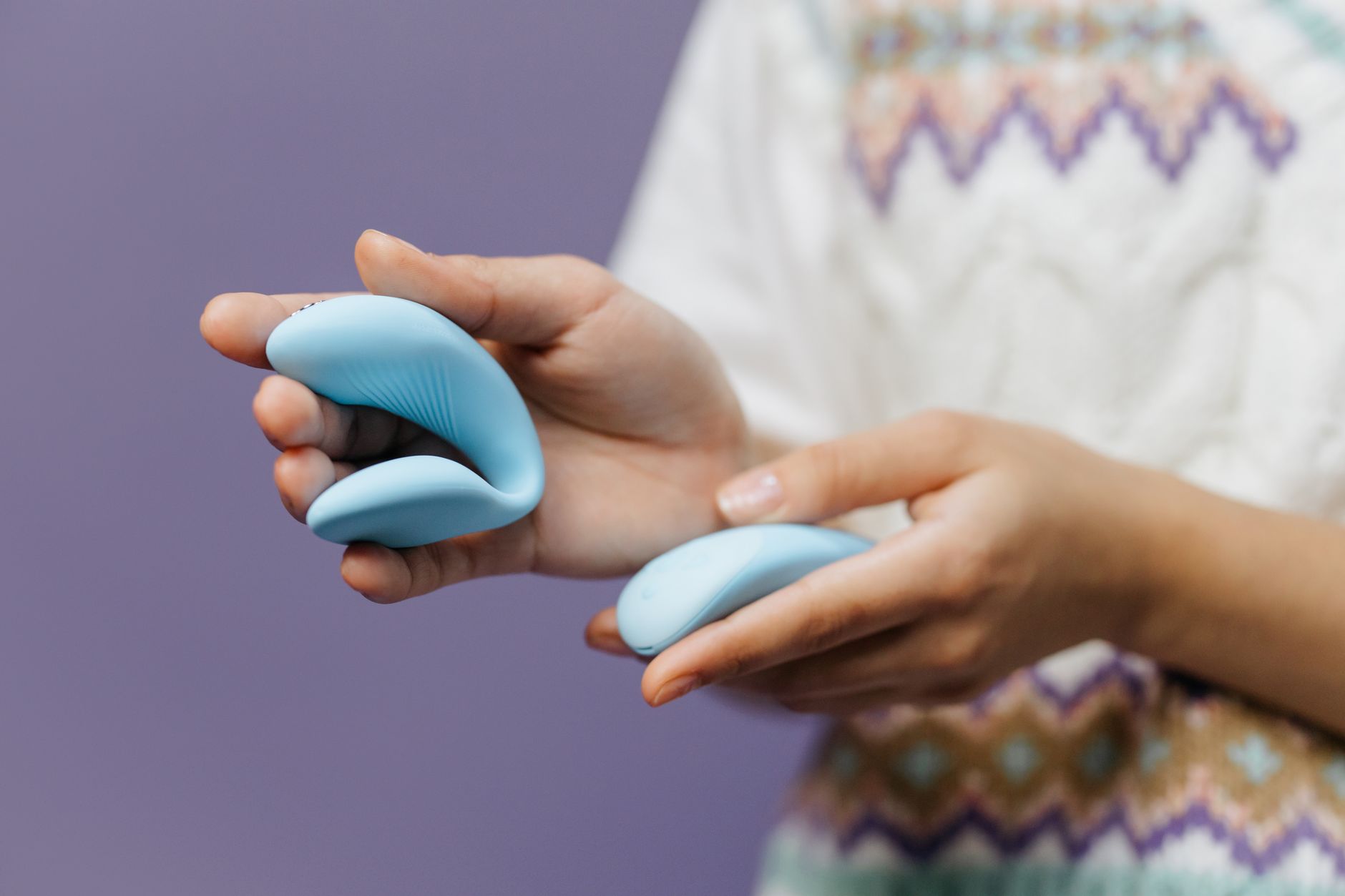
When your partner finally asks
Honestly? That's already a win. Your partner naming curiosity about toys is a gift. It means they're thinking about your pleasure, wondering how to be part of it, and brave enough to say so. The tricky part isn't getting them interested. It's turning that interest into actual comfort, participation, and shared pleasure without anyone feeling clumsy, replaced, or left out.
I've worked with dozens of couples at this exact inflection point. One person wants to explore more. The other wants to help but isn't sure what that looks like. The silence around that uncertainty can turn curiosity into anxiety fast.
Let's walk through what actually works.
The conversation before the toy
Here's where most couples stub their toes. They skip straight to mechanics and miss the permission piece. Your partner needs to hear three things from you first, said plainly.
First: "I want this partly because I want to feel closer to you." Not because they're not enough. Not because they're doing something wrong. Clitoral vibrators work differently than fingers or internal penetration. The sensation is singular, intense, and kind of hard to replicate. This isn't a gap they can fill. It's a different kind of stimulation that happens to feel incredible. Frame it that way.
Second: "I'm excited about exploring this together, and I want you to be comfortable." Their comfort matters more than your access. If they feel pressured or weird, this dies. Dead toy in a drawer, awkwardness for months. Tell them that explicitly. Tell them you'd rather go slow and build something real than rush into anything that feels off.
Third: "Let's figure out what you want your role to be." Some partners want to hold the toy. Some want to control it. Some want to watch you use it solo first and join later. Some want to be doing something else entirely while you get off on your own terms. None of those is wrong. None of those is less intimate. Ask what appeals to them instead of assuming.
What actually happens the first time
Do not go straight to the moment. Set the scene. Invest twenty minutes in foreplay that has nothing to do with the toy. Kissing, touching, building arousal normally. This does three things. It gets you actually turned on, so the toy feels additive rather than like a replacement. It gives your partner a role that feels natural before they're holding something silicone. And it buys time for both of you to settle into the situation instead of jumping into it like you're checking an item off a list.
When you do introduce the toy, let your partner be the one to pick it up first. Let them hold it. Let them feel the weight, the texture, the button. Curiosity is attraction. People want to understand things they're touching. If they feel ownership of the device before it's ever near your body, the dynamic shifts.
Then, here's the part people miss: use it on yourself first while they watch. Not because they're watching is the point, but because it takes the pressure off their role. They get to see how you respond. They get to understand what the sensation is doing. They get to ask questions without the toy being actively involved in your body. "Does that feel good?" "What does that pattern feel like?" "Can you feel the difference between this setting and that one?" Let them see the map before they're navigating it.
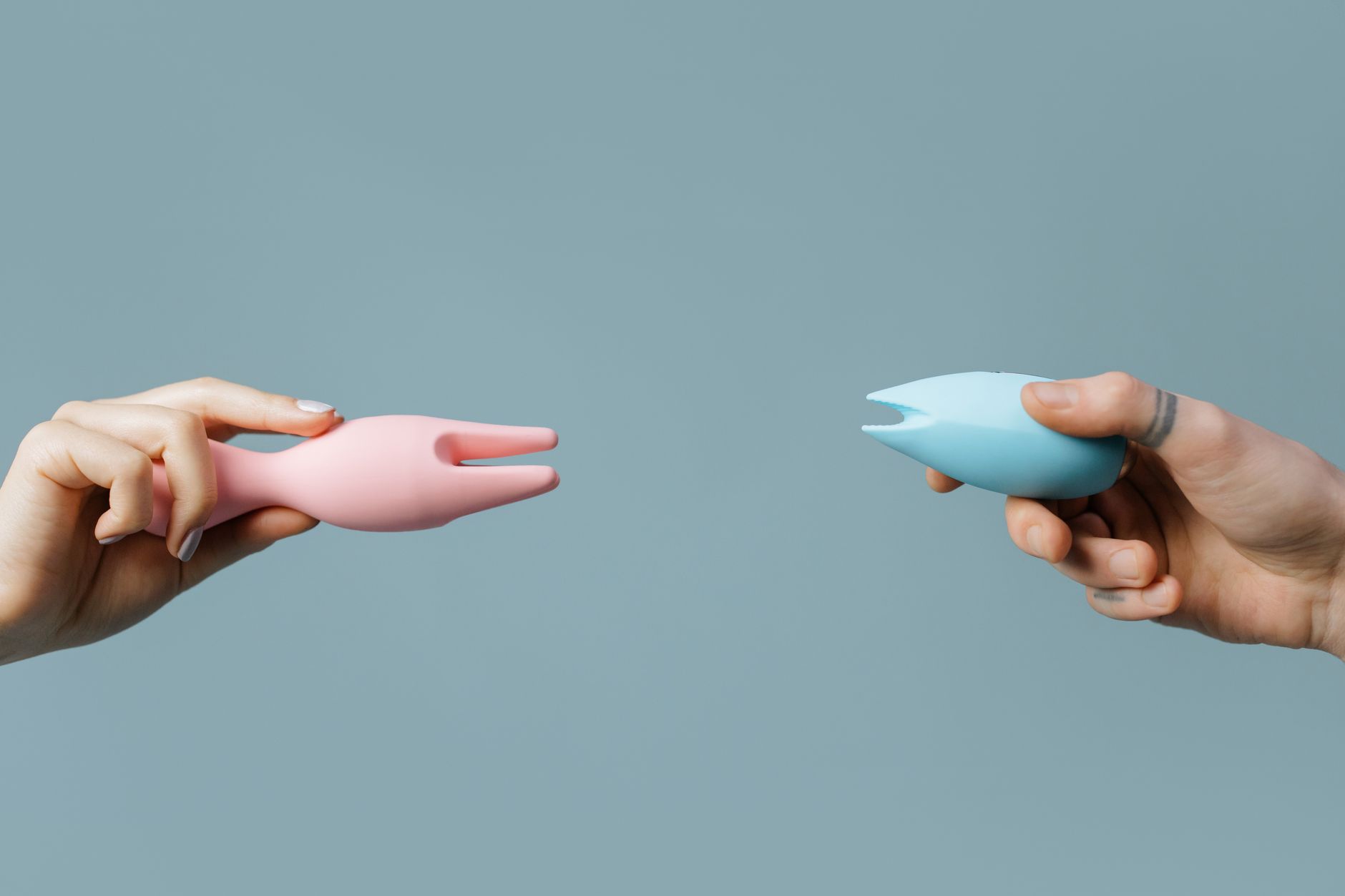
Photo by cottonbro studio on Pexels
Where partners usually want to go and how to get there
Once they've watched, most partners want one of four things. Understanding which one matters, because the instructions change.
They want to hold the toy while you guide. This is probably the most common. You're lying back, they're sitting or standing beside you, and you're directing: "Try this setting," "A little higher," "That one right there." This feels collaborative without being complicated. You still have agency. They still have a clear job. The toy doesn't disappear into their control zone. This works beautifully with lemon vibrators because the handle gives them something to hold and angle without guessing where pressure should go.
They want to fully control it. Some partners find autonomy with the toy exciting. Let them lead for a minute, give them feedback (real feedback, not performance moans), and gently course-correct if they miss the spot. "Slightly to the left," not "you're doing it wrong." After a few sessions, they learn the geography. This requires more trust and communication, which is its own intimacy.
**They want to use it on themselves." For some people, the excitement is reciprocal. They want to know what you're feeling. They want to use a toy on themselves too. This opens a completely different door. Two people, two devices, separate sensations, same bed. Incredibly hot for some couples, and totally valid.
They want to use it during penetration. Some partners want to hold the vibrator against the clitoris while they're inside. This is entirely possible and surprisingly intimate. It requires communication about pressure, angles, and pace. It also requires a partner who understands that your arousal during this isn't about them as much as it's about the combination of sensations. Which is fine. It's real.
The thing nobody talks about: what to do with jealousy
If your partner seems enthusiastic but then gets quiet, or touches the toy with less conviction, or suddenly wants to stop, jealousy might be in the room. Not the insecure "I'm not enough" kind necessarily. Sometimes it's simpler. They want to be the source of your pleasure, and sharing that feels disorienting.
Here's what helps: explicitly connect the toy to them. "I'm more turned on because you're here watching," "I like this because it's something we're doing together," "This feels better right now, but I also love when we do it differently." They need to know they didn't get replaced. They got a plus sign in the equation.
Other times, jealousy is about feeling inadequate. They worry they can't make you feel this good. The fix isn't reassurance only. It's showing them. Let them see the difference between the toy alone and the toy plus their touch, their attention, their presence. The toy is one tool. They're still the person. The person matters more.
If they lose interest
Sometimes the curiosity fades. Your partner watched, tried holding the toy once, and now they'd rather not engage. This doesn't mean anything is wrong with you or your relationship. Some people are genuinely more comfortable with penetration or manual stimulation. Some find toys unsexy. Some find the mechanics awkward and prefer simplicity.
Don't make it mean something it doesn't. You can use lemon vibrators solo. You can use them when your partner isn't in the room. You can invite participation without requiring it. The best relationships I've seen are the ones where both people get to explore their own sexuality within the partnership, not just together.
If you want more involvement but your partner has genuinely checked out, that's a different conversation. One about desire, about whether you're aligned, about what both of you actually want. See a couples therapist if that gap feels significant. It might not be about the toy at all.
Building a practice that sticks
Once you both feel somewhat comfortable, the goal is to move past the novelty. Real integration means the toy becomes unremarkable. It's just there, like you use it sometimes, and your partner participates sometimes, and nobody feels weird about it.
That takes repetition. The first few times feel notable. By the fifth or sixth, it's just Tuesday. Your partner stops watching their own hands and actually watches your face. You stop narrating what you want and they start noticing. You both relax into it.
Here's what I recommend for couples genuinely exploring together: start with your partner holding the toy solo. Let them gain confidence. Then move to them controlling it. Then add penetration if that interests you. Then experiment with both of you using devices simultaneously. Each step should feel natural, not forced. If something feels weird, pause it. There's no timeline. You're not trying to reach some finish line.
The actual intimacy isn't in the toy. It's in the willingness to explore something neither of you fully understands yet. It's in the conversation. It's in asking questions and answering honestly. It's in deciding together that your mutual pleasure matters enough to get a little awkward first.
When to get professional input
If communication breaks down, or resentment creeps in, or one person feels pressured and shuts down completely, that's a sign to get a couples therapist involved. Not because toys are scary. Because there's something beneath the toy that needs attention. Maybe it's about control. Maybe it's about feeling valued. Maybe it's about grief or illness or life stress that's actually what's creating distance.
A sex-positive therapist who specializes in couples can help you untangle whether this is about the toy or about something much deeper. And often, addressing what's underneath makes the toy stuff simple again.
Your partner's curiosity is an opening. How you move through it together is what builds the real thing.
Frequently asked questions
What if my partner is embarrassed about wanting to use toys?
Embarrassment usually comes from messages they absorbed young about sex being private or toys being weird. You can help by normalizing it in conversation. "Lots of couples use these," is fine, but better is "I really like that you're open to exploring this with me." Make them feel brave instead of weird. Eventually, embarrassment fades when it's met with zero judgment.
How do I bring up the idea if my partner hasn't mentioned it yet?
With curiosity, not demand. "I've been thinking about exploring clitoral vibrators. I'd love to know what you think." Not "we should do this." Curiosity is inviting. Demand is pressuring. Let them sit with the idea. They might surprise you weeks later with interest.
Can lemon vibrators work for couples who just started dating?
Absolutely. The conversation matters more than the timeline. If you're new together and want to share toys, just name that. "I think this could be really fun with you," is perfectly reasonable. New relationships don't need permission from time.
What if my partner wants to use the toy but I don't want them near my body yet?
Communicate that immediately. "I want to explore this solo first and then we'll figure out how you fit in." Your boundaries matter. Your partner's curiosity doesn't override your comfort. Respect each other's pace, and you'll build trust that carries into everything else.
Is it weird if my partner gets off using the toy on themselves while I watch?
Not even slightly. Mutual solo pleasure in the same room is incredibly intimate for some couples. You're both being vulnerable. You're both being witnessed. That's real connection.
How often should we be using toys together?
There's no right answer. Some couples use them often. Some occasionally. Some use them solo and rarely together. What matters is that both of you feel good about the frequency. If one person wants more and the other wants less, that's a conversation about desire, not about the toy.
The real shift
What I've noticed over years of working with couples is this. The toy doesn't change the relationship. The willingness to have an awkward conversation changes it. The choice to prioritize each other's pleasure even when it's uncomfortable changes it. The decision to explore something neither of you fully understands yet, together, changes it.
Your partner wanting to be involved is them saying "your pleasure matters to me." That's the whole thing. Honor that. Build from there. Everything else follows.
If you're ready to start exploring together, reach out if questions come up. Real support is waiting for you at /contact.