Let's acknowledge what this feels like
You haven't been inside your own pleasure in years. Maybe it's been a breakup that left you raw. Maybe a long marriage ended, and you've spent the past few years managing logistics, grief, or just survival mode. Maybe you stepped away from sex entirely after something difficult. Whatever the reason, you're here now thinking about your body again, and that thought alone might feel equal parts exciting and terrifying.
Here's what I need you to know: this isn't a failure of continuity. Your capacity for pleasure didn't disappear. Your nervous system just learned to protect itself.
Why your body feels different after a long break
When we step away from sex and touch for extended periods, three things happen in the brain and body simultaneously.
First, the neural pathways associated with arousal quiet down. This doesn't mean they're gone. Your brain has simply deprioritized them because, on some level, you weren't using them. Second, your nervous system enters a different baseline. If the break followed loss or stress, your parasympathetic nervous system (the one that allows relaxation and arousal) may have been in protective mode for months or years. That takes time to recalibrate. Third, your relationship with your own body shifts. If you've spent years in survival mode, reconnecting with sensation can feel weirdly foreign, even uncomfortable at first.
This is completely normal. The good news: the pathways don't need to be rebuilt from zero. They need to be gently reactivated.
Why lemon vibrators work particularly well for returning to pleasure
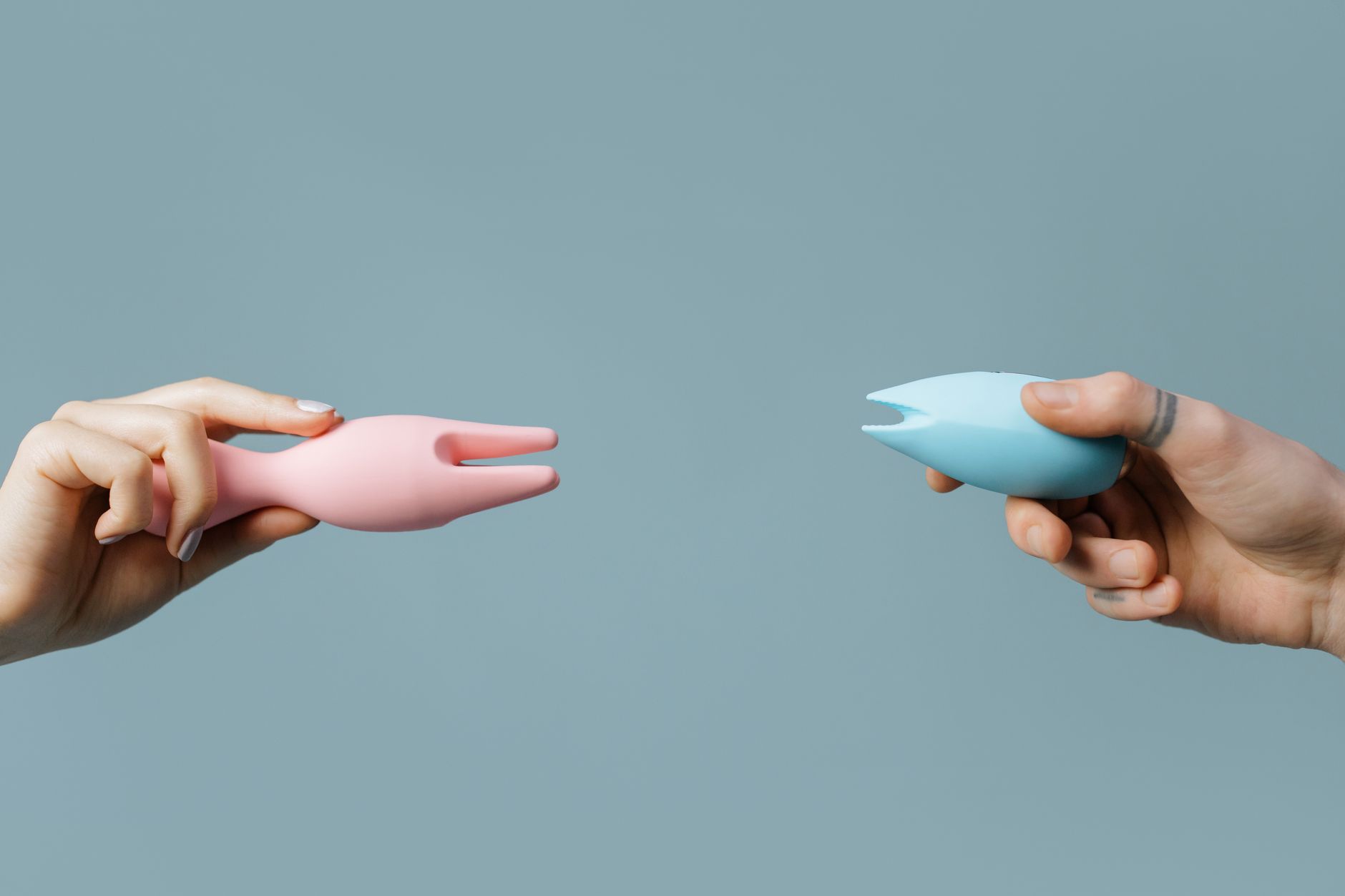
Clitoral vibrators like those from Lemon Toys are uniquely suited to this kind of nervous system reset because of how they deliver stimulation. Unlike penetrative tools that engage deeper pelvic muscles and require a certain level of arousal to feel good, a quality clitoral vibrator does the work for you. You don't need to generate momentum or engage your own muscles. The device meets your tissue exactly where it is.
Lemon clitoral vibrators are also precise. The sensation is localized and controllable in ways that manual touch or partner contact sometimes isn't. You can start at the lowest intensity, explore exactly where feels good, and adjust without having to communicate anything to anyone. That control is psychologically important when you're rebuilding trust in your own body.
Your first session: how to actually start
Forgot how to do this? Don't sweat it. Here's the framework I use with clients.
Step one: context matters. Carve out time when you're unlikely to be interrupted. Not rushed, not worried. A weekend afternoon, or a quiet evening after kids or housemates are asleep. You're not building toward a goal here. You're building a feeling of safety with yourself.
Step two: start clothed. Yes, really. If returning to touch feels anxiety-inducing, your first session might be clothed or partially clothed, maybe with the vibrator over your underwear or pants. This isn't cheating the process. It's building a bridge between "not touching myself" and "touching myself," and that bridge can be really important psychologically. Many clients find that even five minutes of gentle external stimulation over fabric reawakens the sensation before they're ready for direct contact.
Step three: set the lowest intensity. Most lemon vibrators have multiple patterns and speed settings. Start at pattern one, the gentlest setting. Your tissue isn't numb, but your attention is. You're learning to notice what you feel, not chasing intensity. Give yourself permission to spend an entire 10-15 minute session on the lowest setting.
Step four: notice without judgment. What do you feel? Pressure, warmth, tingling, tightness, numbness, weird sensations, good sensations? All of this is data. None of it means anything is wrong. If you feel almost nothing, that's okay. Your nervous system is still learning it's safe to feel things. If you feel self-conscious or emotional, that's also okay. Long breaks can release a lot of stuff.
Building your solo practice week by week
Week one: low intensity, clothed or light contact, 10-15 minutes, no goal. You're just waking things up.
Week two: add direct contact if you're ready. If clothed contact felt good, try skin-to-skin on the same lowest intensity. If you're not ready, keep going clothed. There's no schedule here.
Week three: now you can explore patterns and speed a little more. Maybe you go from pattern one to pattern three. Maybe you discover a particular rhythm that feels good. Take notes if it helps. Notice what's waking up.
Week four and beyond: you've established a baseline. Now you can think about whether you want to explore intensity, or whether you'd rather deepen sensation at low settings, or whether you want to bring self-touch back in alongside the vibrator. You're not chasing an orgasm yet. You're rebuilding familiarity.
Many clients are shocked at how quickly sensation returns once they start. The pathways are still there. They just needed permission and patience to reactivate.
If you're partnered again (or thinking about it)
If a new partner is in the picture and you're nervous about that transition, here's what I recommend: use a lemon clitoral vibrator solo for at least three to four weeks before bringing a partner into the picture. This serves several purposes.
First, it reminds your body what pleasure feels like when there's zero pressure. You're not performing. You're not worried about someone else's timeline or experience. You're just feeling. Second, it gives you concrete information about what feels good, which you can then communicate or explore with a partner if and when you're ready. Third, it establishes a boundary between your solo pleasure and partnered pleasure, which is psychologically healthy regardless of circumstances.
When you do bring a partner in, lemon vibrators work beautifully alongside partnered sex or foreplay. Many people find that using a clitoral vibrator during partnered sex helps them relax into their own sensation instead of focusing on their partner's experience. That permission to focus inward is invaluable.
Managing emotional stuff that comes up
Honestly, some clients cry during or after their first session back into solo pleasure. Years of not touching yourself, or being touched, can hold a lot. Grief, anger, shame, loss, relief. All of it can surface when you're suddenly in your body again.
That's not a sign to stop. That's a sign your nervous system is processing. Let it happen. Some of my clients journal after their sessions. Some go for a walk. Some just sit with it. There's no right way to process reconnection. But expect that returning to your body might be emotionally interesting, not just physically interesting.
If you find yourself having panic responses or intense anxiety around touch, that's worth mentioning to a therapist or counselor. Long breaks sometimes follow trauma, and professional support can be really valuable in that context. That's not weakness. That's wisdom.
Rebuilding confidence in your own desire
One thing that surprises people: after a long break, desire itself can feel unfamiliar. You might be surprised by what turns you on, or discover that your tastes have shifted, or find that arousal looks completely different than it did ten years ago. That's evolution, not confusion.
I encourage clients to stay curious about their own desire rather than trying to match it to an old template. "What does my body actually want right now?" is a much more useful question than "What did I used to like?" You're not the same person you were before the break. Your pleasure doesn't need to be either.
FAQ: Common questions as you're rebuilding
How long before I can orgasm again?
It varies widely. Some people orgasm in their first or second solo session. Others take weeks. There's no timeline. Orgasm is not the goal of these early sessions. Sensation and reconnection are the goals. When orgasm comes, it'll be a bonus, not a verdict on your progress.
Is it normal to feel numb or very little sensation at first?
Completely normal. Your nervous system might still be in protective mode. Keep going gently. Sensation returns. Forcing intensity won't speed it up. In fact, it usually slows it down because your nervous system tightens against pressure.
What if I feel guilt or shame about pleasure after my break?
This is really common, especially if the break followed a difficult relationship or loss. Pleasure can feel disloyal, or frivolous, or like you're forgetting about what hurt. You're not. Reconnecting with your own body is actually part of healing. It's a way of saying, "I deserve to feel good," which is not the opposite of grief or respect for what happened. It's a parallel process.
Can I use a lemon vibrator if I'm still partnered with someone?
Yes, absolutely. Solo pleasure and partnered pleasure are different experiences. Using a vibrator alone doesn't threaten a partnership. If your partner feels threatened by that, that's a relationship communication worth having, not a reason to skip your own pleasure. Many couples actually find that individual pleasure practices strengthen their connection because everyone's happier and less resentful.
What if I'm starting over and not sure about partnered sex yet?
Start solo. There's no rush to move to partnered anything. Many people find that reconnecting with their own body solo actually makes the thought of partnered sex feel less scary because they've reestablished trust with themselves.
Is there a difference between lemon vibrators and other clitoral vibrators for someone starting over?
Lemon vibrators are designed with attention to sensitivity and customizable intensity, which matters a lot when you're reawakening sensation. The precision of the stimulation and the ability to start at genuinely low settings makes them particularly good for nervous systems that are still recalibrating. That said, the most important thing is that whatever tool you choose feels good to you. Some people prefer wand vibrators, some prefer smaller devices. Let your own body tell you what works.
The truth about starting over
You're not broken because you took a break. Your body hasn't forgotten how to feel pleasure. Your capacity for intimacy, with yourself or with a partner, is still intact. It's just quiet right now, and quiet things take time to wake up.
Start low. Start slow. Start alone. Trust your own pace. And know that thousands of people have walked this path before you and come out the other side with stronger relationships with their own pleasure than they had before the break. You can too.
When you're ready to talk through what's coming up or want guidance specific to your situation, we're here. Reach out anytime.