Let's be real about hormones and pleasure
Your body doesn't stay the same throughout your life, and that includes how it responds to touch, stimulation, and yes, lemon vibrators. Whether you're navigating perimenopause, postpartum recovery, hormonal birth control, or just aging into a different decade, hormonal shifts change the physical mechanics of pleasure. Not the capacity for it. Not the right to it. The mechanics.
Here's what I see most often in my practice: someone picks up the same lemon clitoral vibrator they've loved for years and suddenly it feels different. Too intense. Not intense enough. Slower to build. Harder to finish. And then they panic, thinking something's broken. It's not. Your body is just speaking a different language now.
How hormones reshape clitoral response
Estrogen and testosterone are the primary architects of sexual response. When estrogen drops (hello, perimenopause, menopause, certain medications), several things happen simultaneously.
Tissue thins slightly, especially in the vulva and vagina. This means nerve endings sit closer to the surface, which sounds like it would increase sensitivity. Sometimes it does. More often, it means direct pressure feels less comfortable. Light touch and suction-based stimulation, like what a lemon vibrator provides, becomes more pleasurable than intense vibration alone.
Blood flow to the clitoris slows. This doesn't kill arousal, but it does mean the buildup takes longer. Your body is asking for patience, not rejection.
Testosterone drops too. In people with ovaries, testosterone drives desire and sensitivity. When it's lower, the clitoris can feel less reactive initially. It's not dead weight. It's hibernating a bit, and it needs a slower warm-up.
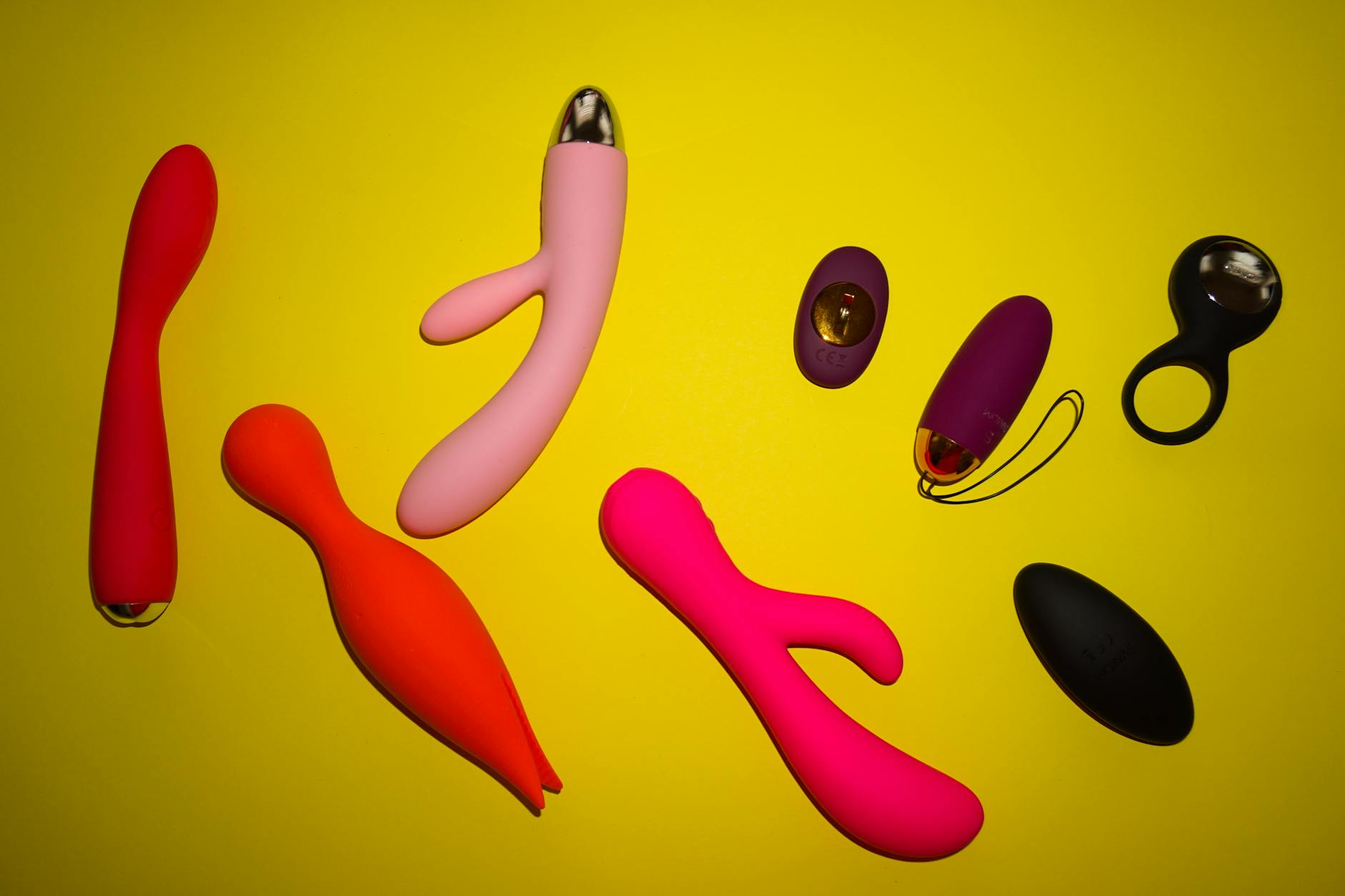
Photo by FounderTips . on Pexels
Why lemon vibrators work differently for hormonal bodies
If you're familiar with the conversation around how to choose between suction and vibration toys, you know that lemon sexual toys use air-pulse or suction technology rather than traditional vibration. This matters enormously when hormones shift.
Suction stimulates the entire clitoral network, not just the external tip. It creates a gentle vacuum effect that many people find less jarring than direct vibration against thinner tissue. When your estrogen is lower, this approach often feels more intuitive and more pleasurable than it might have before.
Lemon vibrators also typically work on multiple intensity levels. This flexibility is gold when your body is in transition. You're not locked into one sensation. You can start at pattern 1 or 2, stay there for as long as you need, and build gradually. No pressure to jump to maximum intensity.
The toy itself doesn't change. Your nervous system's preferences do. What felt like the perfect rhythm at 35 might feel overstimulating at 45 or 55. That's not the toy failing you. That's your body becoming more specific about what it wants.
What changes and what stays the same
Let me be specific, because vagueness helps no one.
What changes with hormonal shifts:
Warm-up time increases. Budget 10 to 20 minutes of foreplay instead of 5.
Initial response feels slower. Your clitoris won't swell as quickly. This is normal. Keep going.
Intensity tolerance shifts. What was comfortable might now feel too sharp or not sharp enough. Relearn your body's new dial.
Orgasm shape sometimes changes. It might feel more concentrated, less explosive. Different, not worse.
What absolutely does not change:
Your capacity to have powerful, deeply satisfying orgasms.
The number of nerve endings in your clitoris. They're still there.
Your right to prioritize your own pleasure and invest in tools that serve you.
Many of my clients report that their most intense orgasms arrive after a hormonal shift, once they stop fighting their body and start working with it. This is not sentiment. It's clinical observation.
Practical adjustments for hormonal transitions
If you've noticed your lemon clitoral vibrator (or any toy) feels off, here's what actually helps.
Start lower than you think you need to. Your new baseline is probably gentler than your old one. You're not weak or broken. Your tissue is just asking for respect.
Invest in quality lube. Water-based if you're using silicone toys, which includes most lemon adult toys. Lube isn't a Band-Aid for broken arousal. It's a tool that lets thin tissue experience sensation without friction discomfort.
Extend your warm-up ritual. Use your hands, your partner's hands, or a toy to build arousal slowly. Think of it as foreplay that earns the intensity you want later.
Experiment with positioning. How you angle the toy against your body changes the sensation dramatically. What worked lying down might not work sitting up. Curiosity, not judgment.
Track patterns. Hormone levels fluctuate week to week. Keep a simple note on your phone: what felt good, what didn't, what you tried. You'll spot patterns that help you predict your own needs.
When to bring a doctor into the conversation
If penetration hurts, if arousal has completely vanished, or if you're experiencing pain during or after orgasm, see a menopause-trained gynecologist or your GP. Genitourinary syndrome of menopause (GSM) is real and treatable. Topical estrogen creams work fast and have minimal systemic absorption.
If desire has flatlined and isn't bouncing back on its own, testosterone therapy is worth discussing with your doctor. It's conservative in some regions, more accessible in others, but it's a legitimate option that transforms the experience for many people.
Hormonal birth control also changes response. Some people thrive on it. Others find their pleasure muted. If you suspect your pill, patch, or IUD is dampening sensation, talk to your prescriber about alternatives or timing adjustments.
The emotional layer (which matters as much as the physical one)
Here's something I rarely see discussed: your brain is a major player in this shift, and I'm not talking about psychology or spirituality. I'm talking about the actual biology of how your nervous system receives sensation.
When you expect your body to work differently, you tense. When you tense, pleasure contracts. When pleasure contracts, it's harder to reach the same intensity you're used to. The body delivers on what you unconsciously believe about it.
If you believe that hormonal changes kill pleasure, your nervous system will defend that story with every tight muscle it can muster. If you believe that your body is evolving into a different kind of pleasure, your nervous system can relax into curiosity and discovery.
This isn't positive thinking nonsense. It's neurobiology. Your expectations literally change how your body processes sensation. So the mindset piece isn't optional. It's foundational.
Many people also experience grief during hormonal transitions. Your body was one thing, and now it's another. That's real. Mourn it if you need to. Then move toward what's possible now, not what was possible then.
Why lemon vibrators are built for changing bodies
The design of lemon sexual toys, particularly the suction-based models, essentially anticipates this conversation. They're gentler on delicate tissue. They work across a wider range of intensities. They stimulate in ways that don't require the same level of immediate clitoral engagement that older vibration technology demands.
If you're new to lemon vibrators and you're navigating hormonal shifts, you're actually starting at an advantage. You don't have years of expectation baked in about how pleasure "should" feel. You get to meet your body where it actually is.
If you're a longtime user of lemon clitoral vibrators and things suddenly feel different, good news: you're not outgrowing pleasure. You're just graduating to a different frequency. Adjust your approach, give yourself grace, and you'll find the intensity and satisfaction is still absolutely there.
FAQ: Hormonal changes and pleasure
Do hormonal changes make you permanently less sensitive to vibrators?
No. Sensitivity changes, but sensitivity is not the same as capacity for pleasure. Your clitoris remains capable of powerful response. The sensation might feel different, the timeline might be longer, the preferred intensity might shift. But "less sensitive" isn't the same as "broken." Many people find they can reach deeper, more sustained pleasure once they stop fighting the change and start exploring it.
Will lemon vibrators help if my hormones are shifting?
Lemon clitoral vibrators and other suction-based toys often feel better during hormonal transitions than traditional vibrators. The gentler, broader stimulation suits bodies with thinner tissue or lower estrogen. The multiple intensity settings let you start low and build gradually, which matches how arousal typically works during these phases. That said, individual experience varies widely. What works is what works for your body, period.
How long does it take to adjust to pleasure changes after hormonal shifts?
It depends on what shifted. Postpartum recovery typically takes weeks to a few months. Entering perimenopause or menopause is a years-long transition, so adjustment is ongoing. Birth control changes can show up within a couple of cycles. The bigger the hormonal change, the longer the adjustment. Be patient with yourself. You're not slow. Your body is just integrating something new.
Can I use the same lemon vibrator I've always used, or do I need a new one?
You can absolutely use the same toy. You'll just use it differently. Lower intensity settings. Longer warm-up. Different angle or pressure. Think of it like how you might still love your favorite jacket but wear it differently in summer versus winter. The tool is the same. The application evolves.
What if my partner doesn't understand why pleasure feels different for me?
This is where I'd recommend a direct conversation outside the bedroom. "My body is responding differently because of hormonal changes. It's not about attraction. It's not about you. It's physiology. Here's what I need to feel good." Most partners respond well to clarity. If they don't, that's a separate conversation worth having with someone trained in couples work.
Is it normal to need more time or different stimulation after 40?
Completely normal. Hormones shift, tissue changes, nervous system sensitivity evolves. This isn't decline. It's adaptation. The people I work with who lean into this change and get curious about their evolving pleasure often experience more satisfaction in their 40s and 50s than they did in their 20s and 30s. The baseline is just different. The ceiling is often higher.
Your body knows what it needs
The best part about hormonal shifts and pleasure is this: your body becomes more honest. It stops tolerating what doesn't work. It gets louder about what it actually wants. Most people interpret this as loss. I interpret it as clarity.
If your lemon vibrator feels different, that's information. Your nervous system is telling you something about what serves you now. Listen to it. Adjust. Explore. The pleasure you're chasing isn't behind you. It's just around a bend you haven't fully walked yet.
If you're navigating these changes and feeling lost, or if pleasure has taken a backseat in your relationship during a hormonal transition, reach out. This work is worth doing.