
Why Your Lemon Vibrator Suddenly Feels Different
Let's be real: midlife hormonal shifts change how your body responds to pleasure. If you've been using a lemon vibrator for years and suddenly it feels different, you're not imagining it. That shift is physiological, and it matters. But here's the thing that nobody tells you. Different does not mean worse. It means your body has changed, and your approach can change with it.
Many of my clients describe the experience as their lemon vibrator feeling less intense, requiring longer warm-up, or producing sensations that feel subtly displaced compared to earlier years. Some notice that the intensity settings they once loved now feel overwhelming. Others find they need more lubrication, or that their orgasms arrive from a different angle than before. All of this is completely normal. All of it is fixable.
The Hormonal Changes That Affect Sensation
Estrogen and progesterone fluctuate dramatically during perimenopause and menopause. As estrogen declines, the tissue around your clitoris becomes thinner and less vascularized. That means less blood flow to the area during arousal, which changes how quickly you become sensitized to stimulation. Your lemon clitoral vibrator isn't weaker. Your tissue is responding differently to the same input.
At the same time, your nervous system is recalibrating. The receptors in your clitoris don't disappear, but the speed at which they fire can slow. This is why arousal often takes longer during midlife. Your body isn't refusing pleasure. It's asking for more time.
Testosterone also drops, and yes, people with vulvas produce testosterone. This hormone fuels desire and contributes to the intensity of orgasm. Even a modest decline can make pleasure feel less urgent, less sharp. Some clients describe it as pleasure moving from the surface to something deeper and more diffuse.
What Actually Stays the Same
Here's what I want you to hold onto: the clitoral nerve pathways don't disappear. Your brain's capacity for pleasure doesn't shrink. The physical architecture of orgasm remains intact. You have not lost the ability to feel intensely. You've shifted into a different sensitivity band.
Many of my clients in their 50s and 60s report that once they adjust their approach to their lemon vibrator, their orgasms become richer and more satisfying than they were at 35. This isn't polite encouragement. It's a clinical observation I've seen consistently across decades of practice.
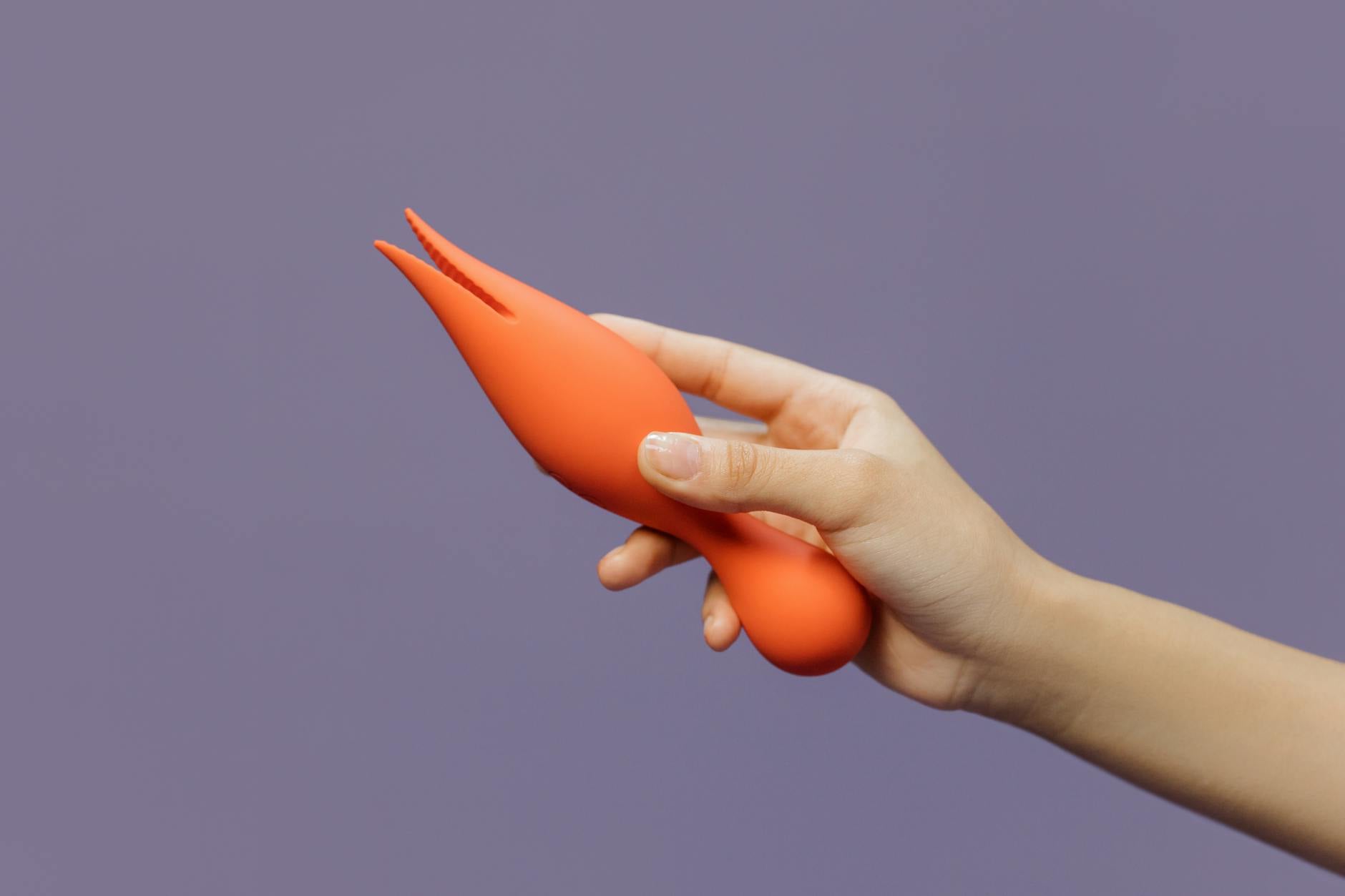
Photo by cottonbro studio on Pexels
Why Your Lemon Vibrator Might Feel Too Strong Now
This is one of the most common complaints I hear. A client who loved pattern 5 on their lemon sucker suddenly finds it uncomfortable. The sensation feels scrachy or too acute rather than pleasurable. This happens because thinner tissue has less padding. The vibration that once felt perfectly intense now translates directly to nerve endings without the buffer you had before.
The fix is simple but requires permission: start lower. Use patterns 1 through 3 for several weeks. Let your body acclimate. Your sensitivity will return, but it's recalibrating to new tissue conditions. Fighting this by pushing to old intensity levels only creates tension and disappointment.
Some clients benefit from adding lubrication even if they never needed it before. A good water-based lube reduces friction and allows the vibration to disperse more gently across the tissue. This is not a sign of dysfunction. It's a practical adjustment.
How Lubrication Changes Everything
During midlife hormonal shifts, vaginal lubrication often decreases. The tissue around your clitoris is less hydrated at baseline. This is where lube becomes your best ally, especially with a lemon clitoral vibrator that relies on direct contact.
Water-based lubricants work best because they mimic your body's natural moisture and won't damage silicone. Apply it generously before you start. Reapply midway through if things feel dry. This isn't about being broken. It's about creating the environment where your body can respond.
I recommend keeping lube near your bed and making it part of your setup ritual, not an emergency measure. Treating it as standard practice removes shame and normalizes the adjustment.
Arousal Takes Longer. That's Actually a Feature.
One of the biggest frustrations I hear is that arousal has slowed. Where clients used to reach peak sensitivity in five minutes, they now need fifteen or twenty. The temptation is to see this as a problem. I see it as an opportunity.
Longer arousal means you're building sensation layer by layer instead of rushing to the peak. For many people, this produces more satisfying orgasms. The intensity builds more gradually, which can feel deeper and more whole-body.
Budget the time. Treat the warm-up phase of using your lemon vibrator as part of the pleasure itself, not a hurdle to overcome. Start at lower intensity. Move through the pattern settings slowly. Notice when sensation shifts. This deliberate pace often leads to more consistent, powerful orgasms than rushed intensity ever did.
When Hormonal Shifts Affect Orgasm Quality
Some clients describe their orgasms as feeling flatter or less intense after midlife hormonal changes. Others report they feel different in location or character. These shifts are real and they're worth acknowledging.
What's changing is partly neurological. Your pelvic floor muscles have less estrogen support, which can change how orgasmic contractions feel. Sometimes this makes orgasms feel more subtle. Sometimes it concentrates them in a specific area rather than radiating outward. Sometimes it makes them last longer but feel less peaked.
None of these variations means you're broken. They mean your body's pleasure response is adapting to new hormonal conditions. When you're working with a lemon vibrator during this transition, notice what you're actually experiencing rather than comparing it to what you remember. Curiosity works better than judgment.
The Role of Pelvic Floor Health
Your pelvic floor supports sensation and influences how stimulation feels. During midlife, pelvic floor muscles often tighten as estrogen support decreases. Paradoxically, a tight pelvic floor can make pleasure feel muted because tension blocks sensation flow.
Kegels help, but so does the opposite. Spend time learning to fully relax your pelvic floor. When using your lemon clitoral vibrator, take moments to consciously soften the area. Drop your shoulders. Release tension in your inner thighs. Let your pelvic floor settle. This sounds simple but it transforms how stimulation registers.
If tightness is extreme or painful, pelvic floor physical therapy is worth exploring. A specialist can identify whether you need to strengthen or release, which makes all the difference.
Adjusting Your Lemon Vibrator Routine for Midlife
Here's my practical framework for adapting your approach during hormonal shifts:
Start slower. Begin with your lemon vibrator on lower patterns than you used before. Let arousal build gradually. You can always increase intensity, but jumping straight to old settings often backfires.
Add lubrication. Use it every time, even if you didn't need it before. This is not weakness. It's adaptation. Quality water-based lube is your friend.
Extend warm-up. Budget twenty to thirty minutes of foreplay or self-touch before using your lemon sucker. Your body needs time to awaken to stimulation. This isn't lost time. It's part of the experience.
Notice rather than compare. Stop measuring your current experience against what you felt at 30. What are you actually feeling now? Where is sensation strongest? What patterns create the best response? Your pleasure is still there. It's just speaking a different language.
Experiment with angle. If direct clitoral stimulation feels different, try angling your lemon vibrator slightly. Sometimes approaching from a slightly different position reignites sensation that feels muted from straight-on.
When to Seek Professional Support
If pain appears during pleasure, don't wait. Genitourinary syndrome of menopause is common and highly treatable. Topical estrogen creams can restore tissue thickness and comfort in weeks. A menopause-informed gynecologist can offer real solutions.
If desire has completely flatlined and isn't returning after several weeks of adjustment, that's worth discussing with a healthcare provider. Testosterone therapy is an option in some cases. It's prescribed conservatively in some countries, but it's available and often transformative for the right person.
If relationship tension is rising alongside these changes, that's also valid. Your partner may feel confused or rejected. A couples therapist who understands midlife transitions can help you both navigate the conversation. This is not a sexual problem to solve alone.
FAQ: Lemon Vibrators and Midlife Hormonal Changes
Why does my lemon vibrator feel numb compared to before?
Hormonal changes decrease blood flow and tissue sensitivity, especially in the clitoral area. This is temporary and responsive to adjustment. Add lubrication, extend warm-up time, and lower your initial intensity setting. Your sensitivity will return as your body acclimates to new conditions.
Can hormonal shifts permanently change my ability to orgasm with a lemon clitoral vibrator?
No. Your orgasmic capacity doesn't disappear. What changes is the pathway your body takes to reach orgasm. For many people, midlife adjustments lead to deeper, more satisfying orgasms once they stop forcing their body into old patterns.
Should I switch to a different toy if my lemon vibrator feels different?
Not necessarily. Before abandoning a toy you love, try adjusting how you use it. Lower settings, more lubrication, longer warm-up, and different angles often restore the experience you remember. Many clients find that once they adapt their approach, their original lemon sucker feels right again.
Does hormonal therapy affect how my lemon vibrator feels?
Yes. If you begin HRT, your tissue response to stimulation will gradually shift back toward earlier patterns over several months. Your lemon vibrator may feel more intense as estrogen returns. You might need to re-adjust settings upward. This is a positive sign that therapy is working.
Is it normal for my partner to feel rejected when my pleasure changes?
Completely normal. Many partners interpret slower arousal or different orgasmic patterns as lack of interest. This is a conversation problem, not a sexual problem. Clear communication about what's happening physiologically helps enormously. Your partner isn't the issue. Misunderstanding is.
Can I still use my lemon vibrator if I have genitourinary syndrome of menopause?
You can, but with support. Topical estrogen or vaginal moisturizers address the underlying tissue thinning. Once that's treated, pleasure with your lemon clitoral vibrator typically returns to comfortable intensity. Don't push through pain. Treat the cause.
What's True and What Isn't
Your pleasure hasn't ended. It's adapted. Your lemon vibrator hasn't lost its power. Your tissue sensitivity has shifted. You're not broken. You're in transition.
Midlife isn't a deadline for pleasure. For many of my clients, it's the moment when pleasure stops being about performance and starts being about genuine feeling. When you release the pressure to match old patterns and instead explore new ones, the experience often deepens.
Give yourself permission to adjust. Lower your intensity. Add lubrication. Take more time. Approach your lemon sucker with curiosity instead of frustration. Your body knows what it needs. You just have to listen.
If you're navigating these changes and feeling lost, that's worth exploring. Reach out to a healthcare provider if physical symptoms are getting in the way. Or simply give yourself the grace of a learning curve. Your pleasure matters. Your adaptation is valid. Your lemon vibrator is still your friend. You're just getting to know each other in a new season.