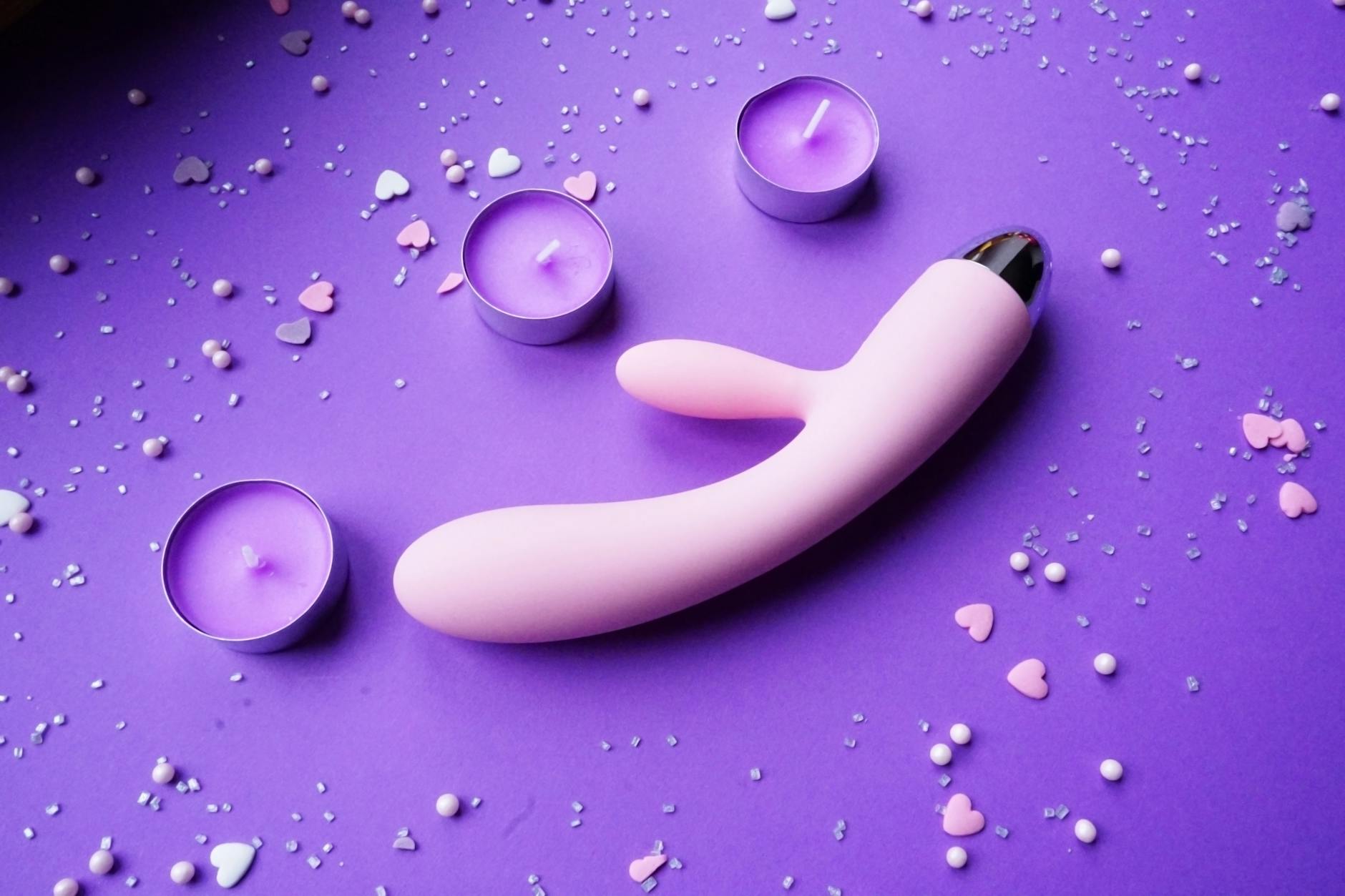
Your body remembers solo play more than you think
Let's be honest. When you've spent months or years exploring pleasure on your own terms, with a lemon vibrator that responds exactly how you want it to, then suddenly reintroduce a partner into that equation, something fundamental shifts. It's not that the vibrator works differently. It's that your body's entire sensory context has changed.
You've trained your nervous system to expect a certain rhythm, a certain kind of control, a certain absence of negotiation. Now there's another person in the room, another heartbeat, another set of expectations. Your body knows this. Your clitoris knows this. And lemon clitoral vibrators, which are designed for precision and direct stimulation, can feel strangely foreign when you're no longer alone with them.
The control factor is real
When you use a lemon vibrator solo, you are the director. You set the pattern. You change your angle. You speed up or pause based purely on what feels good in that exact moment. There's no script, no performance, no awareness of how your pleasure might land with someone else watching or participating.
The moment a partner enters the picture, that autonomy becomes shared. Even if your partner is hands-off and just offering emotional presence, something in your brain registers the shift. You're no longer the sole author of the experience. This can feel restrictive or liberating depending on your relationship dynamic, your attachment style, and how comfortable you are with vulnerability.
With lemon sexual toys specifically, the effect is even more pronounced because these are designed as solo tools. The Lem, for instance, is shaped for self-directed stimulation. When a partner wants to use it on you, or wants to be involved in the experience, the intimacy feels different because the tool itself wasn't designed with that collaboration in mind.
Arousal pathways change with an audience
This is neurology, not psychology. When you're alone, your arousal builds through a specific chain of sensations and thoughts that are entirely private. You might fantasize, you might focus on physical sensation, you might zone out into a meditative state. Your brain is optimized for solo pleasure.
When a partner is present, your brain has to do more work. It has to track their presence, interpret their signals, manage performance anxiety (even in the most secure relationships, this happens), and balance your own sensations with awareness of theirs. The clitoral stimulation from the lemon vibrator is the same, but your brain's bandwidth has been redirected.
Many people report that orgasms feel shallower when a partner is present, even though they're using the exact same toy on the exact same settings. This isn't because the toy stopped working. It's because your nervous system is in a different state.
The physical context matters more than you expect
In solo play, you've probably developed a setup that works perfectly for you. Maybe you're lying at a specific angle, maybe your thighs are positioned a certain way, maybe you've got pillows arranged just so. Your body knows exactly what to do because you've rehearsed it hundreds of times.
Partner sex rarely allows for that level of customization. Your partner's body is taking up space. The bed is being shared differently. Your posture might be contorted in ways that actually reduce the effectiveness of your lemon vibrator, even though technically nothing has changed about the toy itself.
This is why communication about positioning is not romantic beforehand negotiation. It's practical problem-solving. The most effective lemon clitoral vibrators demand good positioning to deliver their full effect. When a partner is present, you have to actively arrange things together.
Why lemon vibrators specifically create this friction
Lemon suction vibrators and clitoral vibrators in the Hello Nancy line are engineered for intense, targeted stimulation. That precision is what makes them so powerful solo. But it also means they have less room for improvisation in partnered contexts.
When you're using a wand vibrator, your partner can theoretically hold it while you move. With lemon adult toys that work via suction, the positioning is more fixed. Your partner can't casually hand it off or adjust the angle without breaking the seal and losing effectiveness. This rigidity, which is a feature in solo play, becomes a constraint when you're trying to coordinate pleasure between two people.
Additionally, lemon clitoral vibrators often have patterns and intensities that were calibrated for solo exploration. You've learned which pattern sends you over the edge in 90 seconds. But that same pattern, deployed during partnered sex when you're also managing intimacy with another person, might feel too intense or too narrow.
The emotional layer you weren't expecting
Here's what people rarely talk about. There's an emotional component to returning to partnered play after solo pleasure routines. If you've spent a year alone with your vibrator, you've built a kind of intimacy with that tool. It knows you. It doesn't judge. It doesn't get tired or frustrated. It's been there for every experience, every mood, every need.
A partner, by definition, is more complicated. They bring their own needs, their own insecurities, their own timing. Using a lemon vibrator in partnered sex can feel like you're introducing a third presence into something that's supposed to be mutual. Some people experience this as exciting. Others feel a subtle resentment toward the toy, toward their partner, or toward the whole situation.
This isn't a flaw in the relationship or a sign that something's wrong. It's just the reality of integrating a tool that's deeply tied to your solo identity into a shared experience.
How to actually bridge this gap
The practical solution has three parts. First, start with honesty about what you need from solo play and what you need from partnered play. These don't have to be the same. You might continue using your lemon vibrator solo for quick, reliable pleasure. And you might develop an entirely different partnered routine that incorporates the toy in a secondary role.
Second, experiment with positioning and involvement. Does your partner hold the vibrator, or do you? Are they watching, or are you face-to-face? Is the toy doing the work while you focus on other kinds of touch, or is it the centerpiece of the experience? There's no single right answer. The key is testing different configurations until something feels natural.
Third, give it time. Your nervous system needs time to integrate this new context. You've spent months training your body to respond to specific stimuli in specific conditions. Retraining takes repetition. After three or four partnered experiences with your lemon clitoral vibrator, the novelty and strangeness wear off. Your body starts to relax into the experience. Orgasms come easier. The toy feels less foreign.
If you're struggling with a partner who's resistant to toys, see our guide on how to use lemon vibrators with a partner who's never tried toys before. That covers the conversation separately from the mechanics.
The permission piece
One last thing. Some people discover, in the transition back to partnered sex, that they don't actually want to use lemon vibrators with a partner. They prefer partnered sex to feel separate from solo play. This is completely valid. You don't have to integrate every aspect of your solo pleasure routine into shared intimacy.
Your lemon vibrator isn't going anywhere. You can continue exploring with it alone while building an entirely different kind of pleasure with a partner. Compartmentalization isn't selfish. It's often wise.
FAQ
Why does my lemon vibrator feel less effective when my partner is in the room?
Your nervous system is processing more information. Even if your partner isn't touching you, their presence shifts your brain's bandwidth away from pure sensation. This is completely normal. Give yourself a few sessions to adjust, and consider experimenting with position or whether your partner should be watching versus doing something else in the room.
Can I use the same lemon vibrator for solo and partnered play?
Yes, absolutely. Many people do. Just be aware that the experience will feel different because your body is in a different state. The vibrator itself is the same. Your context has changed.
Should I tell my partner about my solo lemon vibrator routine?
That depends on your relationship and your comfort level. If you're considering integrating it into partnered play, honesty helps. If you prefer to keep solo pleasure separate, you don't owe anyone access to that information. But if you're feeling guilty or secretive in a way that's bothering you, that's worth exploring with your partner or a therapist.
Is it normal to feel self-conscious using a lemon clitoral vibrator with a partner watching?
Yes. You've built comfort with this tool in a specific context. Changing that context triggers vulnerability, even in healthy relationships. Start slower than you think you need to. Let your partner be a witness before they're a participant.
What if my partner wants to use the vibrator on me but I prefer to use it myself?
Say that. Lemon vibrators work best when you control the angle and pressure. If you prefer self-directed stimulation, your partner can engage in other ways. Touch you elsewhere. Kiss you. Be present. Not every aspect of pleasure has to be shared or relinquished.
How long does it take to feel comfortable using lemon sexual toys with a partner?
Three to five partnered experiences, usually. Your body needs time to stop treating the partner as a disruption and start treating them as part of the pleasure equation. If discomfort persists beyond that, it might point to a different issue worth exploring together.
The takeaway
Your lemon vibrator didn't change. You did. And that's not a loss. It's information. Use it to build the kind of partnered pleasure that actually works for both of you, not the kind you think should work. Your body will thank you for the honesty.