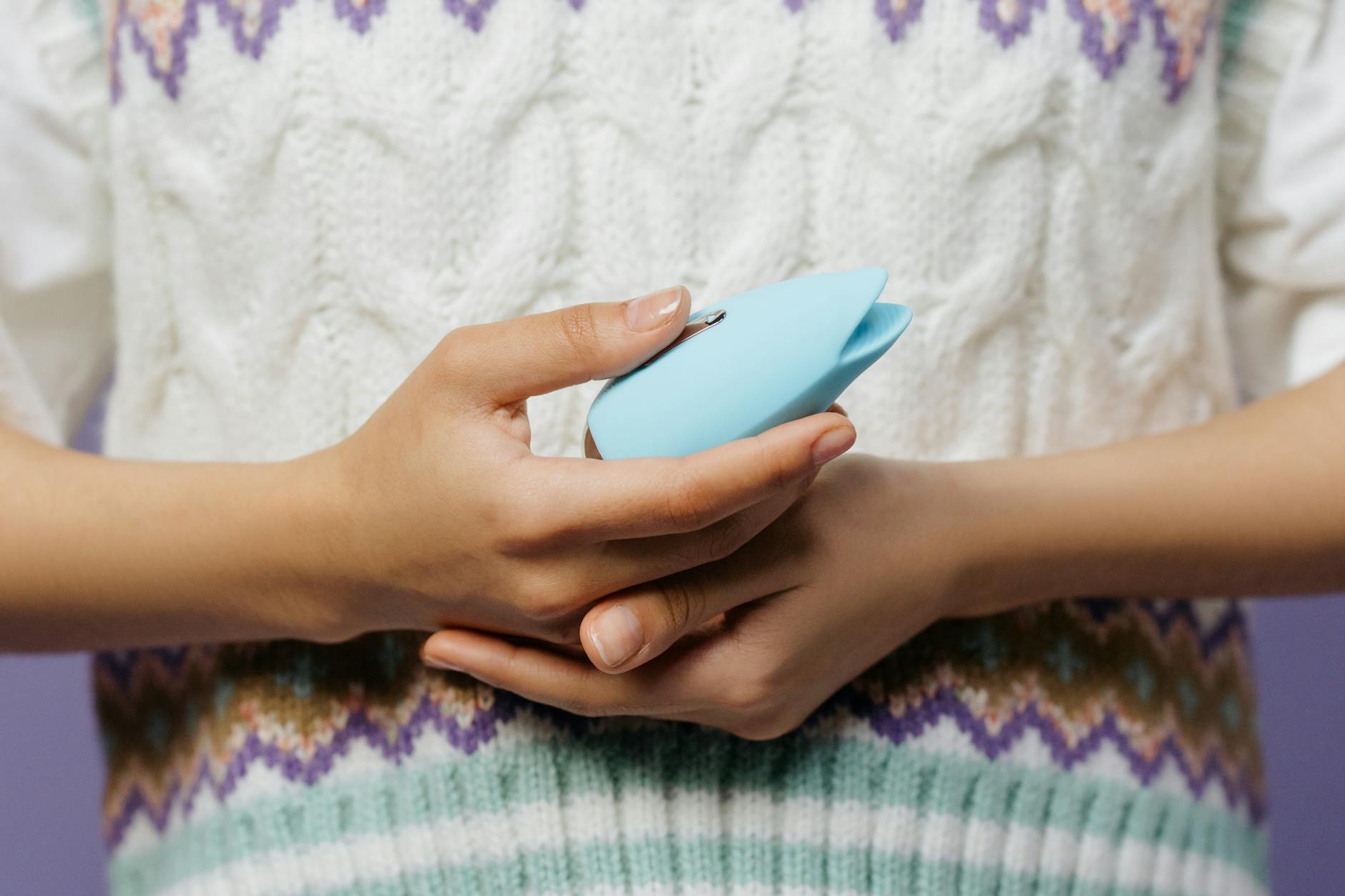
Why vibration feels like it's turned up a notch
Let's be real. Around 40 to 50, many people notice that their Lemon vibrators suddenly feel stronger, sharper, or almost overwhelming in ways they didn't before. It's not that the device changed. Your body did. And understanding what's happening neurologically takes the weirdness out of it and lets you actually enjoy it.
Perimenopause is a 5 to 10 year process where estrogen starts its slow decline. That shift triggers a chain of changes in how your tissue behaves, how your nerves fire, and how your brain processes sensation. Most of it goes unnoticed. Some of it? Feels like someone quietly dialed up the intensity.
The tissue changes nobody talks about
Estrogen does a lot of quiet work. It keeps tissue plump, well-hydrated, and flexible. As estrogen drops during perimenopause, vaginal and vulvar tissue gets thinner. That's not good or bad. It's just different. And thinner tissue transmits vibration more directly to the nerve endings underneath.
Think of it like this: if you're wearing a thick sweater and someone taps your shoulder, it feels soft. Take the sweater off and the same tap feels sharper. Same stimulus, different sensation.
Your clitoris has about 8,000 nerve endings. During perimenopause, the tissue surrounding those nerves thins. That means vibration from Lemon clitoral vibrators reaches those nerves with less buffering. Some people experience this as numbness or reduced sensation. Others experience it as heightened, almost too-much sensation.
Which one you get depends partly on genetics, partly on overall estrogen levels, and partly on how your particular nervous system processes input. There's no one-size-fits-all here.
Why Lemon vibrators hit harder than they used to
Here's the neurological part. Your clitoris connects to two different neural pathways to your brain. One carries deep pressure and vibration. The other carries light touch. During perimenopause, the balance between those pathways shifts.
Vibration typically activates the deeper nerve fibers (the meissner's corpuscles and pacinian corpuscles). As tissue thins, those fibers sit closer to the surface. Stimulation reaches them faster and with less resistance. For many people, that translates to feeling like the vibration intensity just jumped up.
At the same time, estrogen affects something called "sustained attention" in the brain. Lower estrogen means your nervous system is less able to habituate to the same stimulus. In plain language: the vibration doesn't fade into background noise as quickly. It stays sharp and noticeable throughout.
Adding it up: thinner tissue plus reduced habituation plus direct nerve access equals lemon clitoral vibrators that feel noticeably more intense than they did at 35.
When intensity becomes too much
If your Lemon vibrator suddenly feels uncomfortable, you have real options. And it's not about switching to something weaker or giving up.
Start lower on the pattern dial. The Lemon clitoral vibrator has multiple intensity levels. If pattern 4 used to be your sweet spot, try starting at pattern 2 or 3 and moving up. Your body will adjust as you continue using it.
Use more lubrication. Water-based lube doesn't just help with dryness. It also dampens vibration slightly, making it feel less sharp. A thicker lubricant layer between the toy and your tissue acts as a shock absorber.
Change the angle. Direct contact on the clitoris itself during perimenopause can feel too intense. Try positioning your Lemon vibrator slightly off to the side, or use it over your underwear. The fabric creates a gentle buffer.
Take micro-breaks. Thirty seconds off, 30 seconds on. It sounds weird, but it resets your nervous system's habituation and feels completely different from continuous use.
The unexpected pleasure part
Here's what usually surprises people: heightened sensation is often the door to better orgasms, not worse ones.
When tissue sensitivity increases, so does your capacity for nuance. You start noticing patterns on your lemon clitoral vibrator that never registered before. Maybe pattern 6 is too intense, but pattern 5 has this weird stuttering pulse that's incredible. Maybe using it for 15 minutes instead of 5 gives you access to a kind of orgasm you haven't had in years.
Many of my clients in perimenopause report orgasms that are sharper, more localized, and sometimes more intense than they were before. Not everyone, but enough that it's worth treating heightened sensation as an opportunity, not a problem.
How your nervous system is actually changing
Perimenopause doesn't just drop estrogen. It cranks up something called norepinephrine sensitivity. Norepinephrine is the neurotransmitter that makes you alert, focused, and responsive. During perimenopause, your brain becomes more sensitive to it.
This is why you might feel more irritable, more alert, more present in your own body. And yes, more sensitive to touch and vibration.
At the same time, progesterone is also dropping. Progesterone is a mild sedative and dampener. Less of it means less neural quieting. Your nervous system has less background noise and more signal.
Combine those two shifts and you get a nervous system that's primed, alert, and more responsive to sensation like vibration. Again, not broken. Different.
What helps most people
Four things I recommend to almost everyone navigating this shift:
One: adjust expectations, not technique. You're not going to feel the same as you did at 35. That's not a failure. That's biology. Spend a week exploring what new sensations actually feel good instead of chasing the old ones.
Two: experiment with pattern over intensity. Most people assume more power equals more pleasure. During perimenopause, the pattern of vibration often matters more than raw strength. The Lemon vibrator's multiple patterns are your playground here.
Three: track what changes with your cycle. Perimenopause is erratic. Estrogen doesn't drop evenly. Some weeks your Lemon clitoral vibrator will feel intense. Other weeks it'll feel subtle. Knowing which week of your cycle you're in helps you adjust accordingly.
Four: give yourself permission to use it differently. If you've always needed 15 minutes with maximum intensity, and now 8 minutes on pattern 3 gets you there faster and feels better? That's not settling. That's evolution.
The partner conversation
If you're with someone, this is worth talking about outside the bedroom first. "My body is responding differently to stimulation" is different from "I don't want you anymore" or "Something's wrong with me." The first is about biology. The second two are about relationship stuff.
Many couples mistake physical change for emotional change. They don't have to mean the same thing.
If you're using a Lemon vibrator with a partner, you might find you need less time, less direct contact, or a different approach than before. That's data. It's not a referendum on the relationship or your desire.
When to check in with someone
If vibration goes from feeling intense to feeling painful, that's worth a conversation with your doctor. Pain is different from intensity. Pain suggests something else might be happening. Genitourinary syndrome of menopause (GSM) is real and treatable, usually with topical estrogen cream.
If your sensation changes dramatically and suddenly, without any pattern to it, that's also worth checking out. Most perimenopause changes are gradual.
If your Lemon vibrator used to work great and now nothing works, and you're feeling disconnected from pleasure entirely, that might be a sign that something deeper is happening. Sometimes it's hormonal. Sometimes it's about how you're feeling about aging, about your relationship, or about your own body. Both are worth exploring.
The good news underneath all this
Your body isn't failing you. It's reorganizing. And the tools that worked for you before might need a small adjustment to work perfectly now. That's not a burden. It's actually freedom. Most people spend their sexual lives working with one fixed set of tools. You get to discover what works for this version of your body. That's the plot twist nobody expects.
Frequently asked questions
Why do Lemon clitoral vibrators feel sharper than regular vibrators after 45?
Lemon vibrators use a specific type of rapid pulse that interacts differently with thinning tissue during perimenopause. The consistent pattern reaches nerve endings more directly because there's less tissue buffering. Regular vibrators with broader oscillation patterns tend to feel more diffuse. That specificity is why many people find lemon clitoral vibrators feel more pronounced as they age.
Can I use my Lemon vibrator less often to keep sensation the same?
Frequency doesn't really change how your tissue responds. What you're experiencing is a hormonal shift, not habituation from overuse. Using your lemon vibrator less might make individual sessions feel fresher, but it won't stop the shift in how intense it feels. The answer is usually adjusting patterns or angle, not adjusting frequency.
Does everyone experience heightened sensation during perimenopause?
No. About 40 percent of people report increased sensitivity. About 40 percent report decreased sensitivity or numbness. The rest notice very little change. It depends on your starting estrogen levels, genetics, and how rapidly your hormones shift. There's no right experience here.
Should I switch to a less powerful lemon sexual toy?
Not necessarily. Switching toys means losing what you already know works for your body. Instead, try using lower patterns on your current Lemon vibrator, adjusting angle, or changing your warm-up time. Most people find their current toy still works beautifully once they adjust the approach.
Is the intensity change permanent?
During perimenopause, yes. Once you reach full menopause and hormone levels stabilize, sensation usually plateaus. Some people find it stays heightened. Others find it normalizes at a new baseline. It varies. But the active change period usually smooths out after menopause stabilizes, which can take another few years.
What if intense sensation is making partnered sex uncomfortable?
You have options. Use your lemon vibrator solo to build comfort with the new sensation before partnered play. Talk to your partner about what's happening so they understand it's not about them. You might also try using Lemon vibrators with a partner who wants external stimulation only as a way to navigate the shift together. The intensity often feels less overwhelming when it's shared or when you have control over the pacing.