Here's what no one tells you about your cycle and pleasure
Your arousal doesn't stay the same all month. That's not a problem with you. It's biology doing exactly what it's supposed to do, and most people with cycles spend years thinking something is broken because no one explained how the hormonal shifts actually land on pleasure.
I've worked with countless couples where one partner felt hurt because their person "wasn't as interested" on certain weeks, or felt their own pleasure fluctuate in ways that felt mystifying and frustrating. The real story: testosterone and estrogen peak and dip on a schedule. Your sensitivity changes. Your arousal timeline stretches and contracts. Once you map it, you can work with it instead of fighting it.
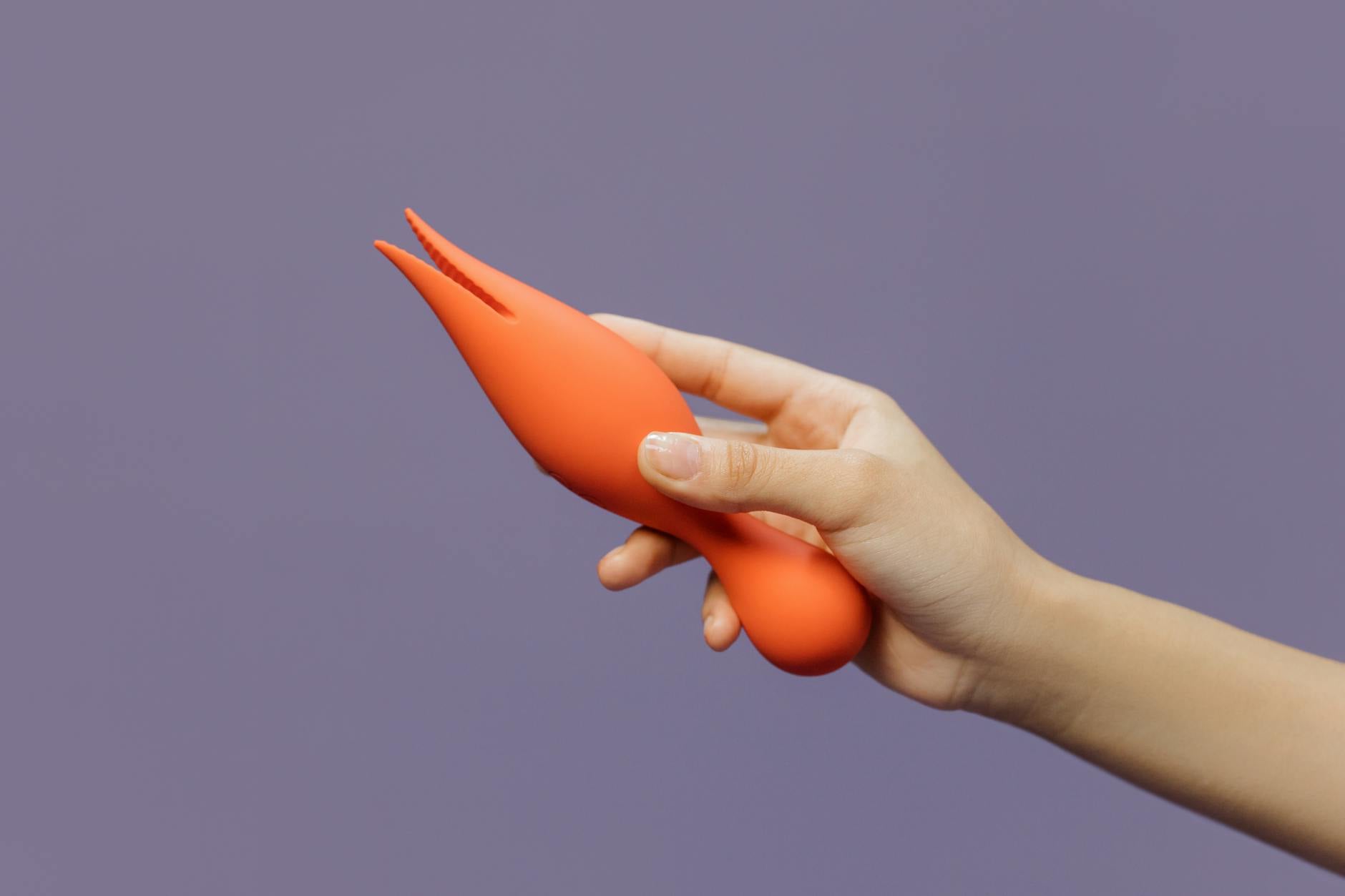
And here's the thing that matters most: Lemon Toys, especially clitoral vibrators like the Lem, work brilliantly across your whole cycle because the sensation they deliver doesn't depend on your body's natural lubrication or arousal pace. You control the intensity, the stimulation pattern, the rhythm. Your body doesn't have to perform.
The follicular phase: arousal ramps up, sensation gets sharper
Days roughly 1-14 of your cycle (it varies). Estrogen is rising. Testosterone is rising. This is the phase where many people find arousal easier to access, sensitivity higher, and orgasms easier to trigger.
What shifts: you might get turned on faster. Direct touch might feel more pleasurable earlier in foreplay. Your body might respond to lighter stimulation than it does in other phases.
If you use a clitoral vibrator here, you'll likely find you can start at lower intensity levels and reach intensity faster. Some people in the follicular phase describe it as their body being "ready to go." That's not an exaggeration. Neurologically, your brain is more responsive to dopamine (the pleasure chemical). Physically, blood flow to your genitals is increasing.
The move: if you usually start on pattern 3, you might find patterns 1 and 2 feel satisfying here. You'll warm up faster, so the longer foreplay window isn't necessary. Many Lemon Toys users report that this phase is when they get their most intense orgasms. That's not random.
The ovulation window: intensity peaks, but so does distraction
Roughly days 12-16. Testosterone and estrogen both spike hard right around ovulation itself. Your body is literally optimized for pleasure from a biological standpoint.
But here's where it gets weird. Many people report that even though their body is most physically capable of pleasure, their brain is scattered. Work deadlines loom. Social calendar fills up. The cognitive bandwidth for pleasure actually shrinks even as the physical capacity expands.
This is where Lemon Toys and other external tools become genuinely useful. You don't need to manufacture arousal or spend 30 minutes warming up. You can access intense pleasure in a shorter window because your body is primed. A dedicated session with a clitoral vibrator at higher intensities can deliver what would take much longer in other phases.
The move: if you're partnered, this is often a sweet spot for solo sessions or partnered play where the focus is explicitly on your pleasure, not mutual arousal or extended foreplay. Your body will thank you. Intensity-wise, many users move up in patterns during this window.
The luteal phase: sensitivity drops, arousal takes longer
Days 15-28 (roughly). Progesterone rises. Estrogen and testosterone decline. This is why the luteal phase gets a reputation for being "low energy"—because neurologically, your brain is oriented toward inward focus and lower dopamine responsiveness.
What shifts: you might need more warm-up time. Direct clitoral touch might feel less pleasurable or even slightly uncomfortable. Your baseline arousal is lower. You might be more attuned to emotional intimacy than physical stimulation. Orgasms might feel more subtle, less explosive.
Many people in the luteal phase say that faster, high-intensity vibration feels jarring or overwhelming. The solution isn't to skip pleasure. It's to adapt the approach. Lemon Toys work here because you have options. You can use lower patterns, longer warm-up sessions, and focus on external stimulation in ways that feel like presence rather than performance.
The luteal phase is also where many people most value the touch of a partner combined with a vibrator, because the emotional component settles your nervous system while the tool handles consistent stimulation. You're not trying to compensate for what your body isn't naturally producing. You're working alongside your actual hormonal reality.
The move: lower patterns (1-3 on most Lemon vibrators), longer arousal windows, and more emphasis on overall sensation rather than goal-oriented orgasm.
Why cycle awareness changes how you use clitoral vibrators
Here's the practical part. Most people learn one way to use their vibrator and stick with it all month. That works, sure. But it means you're working against yourself for half the month.
When you match your approach to your actual hormonal state, several things happen:
You stop thinking something is broken. You understand that your arousal variability is expected and normal. That alone reduces anxiety, which removes a major barrier to pleasure.
You get better results with less effort. In your follicular phase, you need less warm-up and less session time to reach satisfaction. In your luteal phase, you're not chasing an outcome your body isn't primed for. You're deepening sensation within what's actually available.
Your partner (if you have one) stops taking it personally. When your person understands that week 3 is luteal phase and your arousal naturally cycles, they stop interpreting a slower warm-up as rejection. They show up differently. That actually rebuilds intimacy.
You discover new pleasure. Many cycle-aware users report that once they stopped fighting their luteal phase, they discovered sensations and types of pleasure they'd been overriding for years. Slower, deeper connection. More emotional resonance. Different doesn't mean less.
Tracking your own pattern
You don't need an app, though apps help. You need three things: observation, flexibility, and permission to adapt.
Spend one cycle noticing. Note which weeks arousal feels easiest, which require more foreplay, which feel most intense, which feel scattered or low-key. You might notice patterns that don't match textbook cycles. That's fine. Your body is the authority.
Once you map your pattern, change one variable in your pleasure practice that week. If your follicular phase is higher-arousal, you might commit to solo sessions or ask for shorter foreplay with a partner. If your luteal phase feels lower, you might schedule longer sessions with lower intensity, or use a vibrator in combination with partner touch rather than as the main event.
The Lem and other Lemon clitoral vibrators are brilliant here because the pattern range is wide enough that you're never stuck. You can adjust intensity, rhythm, and approach without changing tools.
The deeper thing: pleasure isn't supposed to stay the same
Most of us were raised to believe that if something is "real," it's consistent. Real desire stays constant. Real attraction doesn't fluctuate. Real pleasure is reliable.
Your cycle tells you something different. Your pleasure is real and variable. Your arousal is authentic and cyclical. Your body is honest.
Once you stop fighting that, sex becomes less about performance and more about presence. You're not trying to access the same intensity every time. You're attuning to what's actually available and leaning into it.
That's when clitoral vibrators like those from Lemon Toys become less about compensation and more about adaptation. You're not trying to make your body work for you. You're working intelligently with the body you actually have.
People also ask
How do I know what phase of my cycle I'm actually in?
If you menstruate regularly, day 1 of your period is day 1 of your cycle. From there, follicular is roughly days 1-14, ovulation happens around day 14, and luteal is days 15-28. These aren't rigid. Cycles vary. Apps like Clue or Flo track this automatically. But honestly, the fastest way is to spend one month paying attention to how you feel and noting the calendar. Your body will tell you.
Can I use a lemon clitoral vibrator the same way all month?
Yes, but you might get better results if you don't. Think of it like working out. You can run the same pace every day, or you can match intensity to your energy that day. Both work. One is smarter. Same idea. A Lemon Toys vibrator gives you the flexibility to adjust patterns and intensity to match your cycle, so why not use it?
Does the luteal phase mean I shouldn't expect orgasms?
Not at all. Orgasms in the luteal phase just often feel different. Softer. More internal. Less explosive. Some people find them more emotionally satisfying. It's not about frequency or success. It's about adjusting expectations and technique to what your body is actually capable of in that phase. Tools like Lemon vibrators help you access pleasure even when your natural arousal is lower.
What if my cycle is irregular?
You can't track what doesn't follow a pattern. Instead, track your own arousal and sensitivity week to week without assigning it to cycle phases. Notice: when do you feel most aroused? When does direct stimulation feel uncomfortable? When do you prefer solo sessions versus partnered? Map that. Then use your Lemon Toys strategically around that pattern.
Does hormonal birth control change cycle-based arousal?
Yes. Hormonal BC flattens your hormonal fluctuations, so many people find their arousal stays more consistent all month. Some report lower baseline arousal overall. That doesn't mean toys don't help. It means you might not see the month-to-month shifts. If you're on hormonal BC and arousal feels muted, that's a real thing worth addressing separately.
If I'm in a partnership, how do I talk about cycle-based arousal differences?
Directly. "My arousal naturally cycles. Some weeks I'm ready faster. Some weeks I need more time. It's not about you. It's biology." Then get specific: "Week 2 is usually easier for me. Week 3 needs more warm-up." Invite them into the awareness. Make it a collaboration, not a burden. Many partners feel relieved to understand what's actually happening instead of second-guessing themselves.
The thing to remember
Your cycle is information, not a limitation. When you stop treating arousal fluctuation as a problem and start treating it as data, everything shifts. Your pleasure becomes something you're working with, not fighting against. And that's when tools like Lemon Toys stop being compensatory and become genuinely empowering.
If you want to explore this further or have questions about your own pattern, reach out. I'm here to help you make sense of what's actually happening in your body.